
Muthuswami Dikshitar: The Grand, Unhurried Master
 By Master Bala · 24 July 2026 · 6 min read
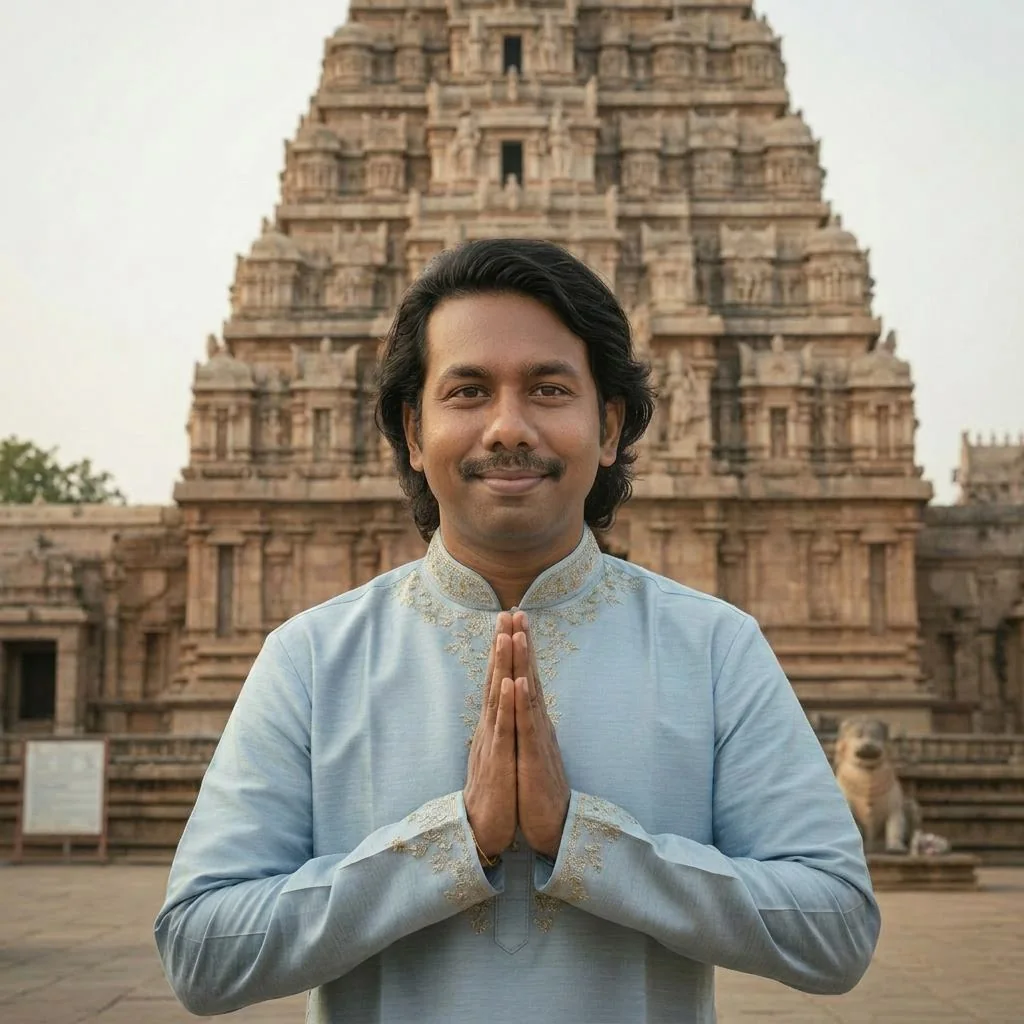
Grand, patient, unhurried, a completely different kind of mastery.
Alright, let us talk about the second of the Trinity, Muthuswami Dikshitar. If Tyagaraja's songs feel like a warm, direct conversation, Dikshitar's feel more like walking slowly through a grand old temple, unhurried, weighty, a little majestic even. Completely different energy, equally brilliant.
Let me break down what makes him stand out, no complicated jargon, just the real picture.
Who was Muthuswami Dikshitar?
Dikshitar was an eighteenth century composer, one of the Carnatic Trinity, known for compositions that feel grand and stately rather than quick or catchy. His kritis are usually slower, giving each phrase room to breathe, and his lyrics often reference temples, deities and Sanskrit poetry with real depth. He was not in a rush, and honestly, that unhurried quality is exactly what makes his music so special.
The quick way to spot his style
Slower tempo, weighty lyrics, temple and deity references, a meditative feel rather than an emotional rush. If a kriti feels like it wants you to slow down and sit with it, there is a good chance it is his.
A composer who travelled, and it shows
Here is something pretty cool about him: Dikshitar travelled widely across India, and a good number of his compositions actually reference the specific places he visited, almost like devotional travel notes set to music. He did not just write about ideas, he wrote about real places he had stood in, prayed in, felt something in.
His songs do not rush anywhere, and that is exactly the point.
Did you know?
Some of Dikshitar's compositions carry subtle Western musical influence, picked up during his travels, which was genuinely ahead of its time for a composer working two centuries ago. He was blending traditions before it was common to do so.
Why his style feels so different from Tyagaraja
Both composers were deeply devotional, no question there, but the delivery is completely different. Tyagaraja's melodies tend to feel personal and immediate, almost like he is speaking directly to you. Dikshitar's feel more ceremonial, structured, built for reflection rather than instant emotional connection. Neither style is "better," they are just different doors into the same devotion.
What learning his songs teaches a student
Dikshitar's kritis are a genuine lesson in patience and precision. They teach a student to slow down, to sit with a phrase instead of rushing past it, and honestly, that kind of patience carries over into everything else you do, not just singing.
Are his songs harder to learn?
They can feel a bit more demanding at first, mostly because of the slower pace and denser lyrics. But here is the good news: with a patient teacher walking you through it step by step, they are completely learnable. Like everything else in this journey, it comes at the right time, not all thrown at you at once.
🎧 No pressure, just listen slowly
There is nothing to prepare at home. Learning Dikshitar's compositions happens gradually, in class, guided every step of the way.
If you are curious, you might listen to one of his slower kritis together sometime, just to feel the pace. Totally optional, never homework.
Come slow down with us
In a world that is always rushing, there is something genuinely refreshing about music that asks you to slow down instead. Come learn with us, and one day you will find yourself sitting comfortably inside one of his grand, unhurried melodies, in no rush to get anywhere else.
Words to know
Trinity, the three great composers, Tyagaraja, Muthuswami Dikshitar and Syama Sastri.
Kriti, a devotional composition, the main song form Dikshitar composed in.
Sanskrit, the classical language many of Dikshitar's lyrics are written in.
Your questions, answered
Who was Muthuswami Dikshitar?
Muthuswami Dikshitar was an 18th century composer, one of the Carnatic Trinity, known for grand, stately kritis often set in slower tempos, with lyrics that reference temples and Sanskrit poetry.
What makes Dikshitar's compositions different from Tyagaraja's?
Dikshitar's style is slower and more stately, almost meditative, while Tyagaraja's songs tend to feel more direct and emotionally immediate. Both are deeply devotional, just expressed at a different pace.
Did Muthuswami Dikshitar travel much?
Yes, he travelled widely across India, and some of his compositions reference the specific places he visited. A few of his songs even carry subtle Western musical influence picked up along the way.
Are Dikshitar's songs harder to learn than other composers?
They can feel more demanding at first because of their slower pace and dense lyrics, but with a patient teacher guiding the way, they are very learnable. Like everything in this tradition, they come at the right time, not all at once.
Ready to slow down and learn?
Send us a message on WhatsApp, and we will help you or your child begin, online, or here with us in Puchong.
💬 WhatsApp Us
Master Bala
Master Bala carries the timeless tradition of Carnatic music to a new generation at Laxmi Music Academy in Puchong, teaching with patience and devotion, and guiding each student from their very first note all the way to the stage.