

Sa Ri Ga Ma: Meet the Seven Swaras
You already know these seven swaras, you’ve hummed them all your life. A warm, jargon-free introduction to the building blocks of every Carnatic song.
What Is Deepavali? The Festival of Lights
What is Deepavali? A simple guide to the festival of lights: what the name means, when Deepavali 2026 falls, and why families light rows of oil lamps.
Why We Celebrate Deepavali: The Story Behind It
Why do we celebrate Deepavali? The story behind the festival of lights, from Krishna and Narakasura to Rama's return to Ayodhya, and what the lamps mean.
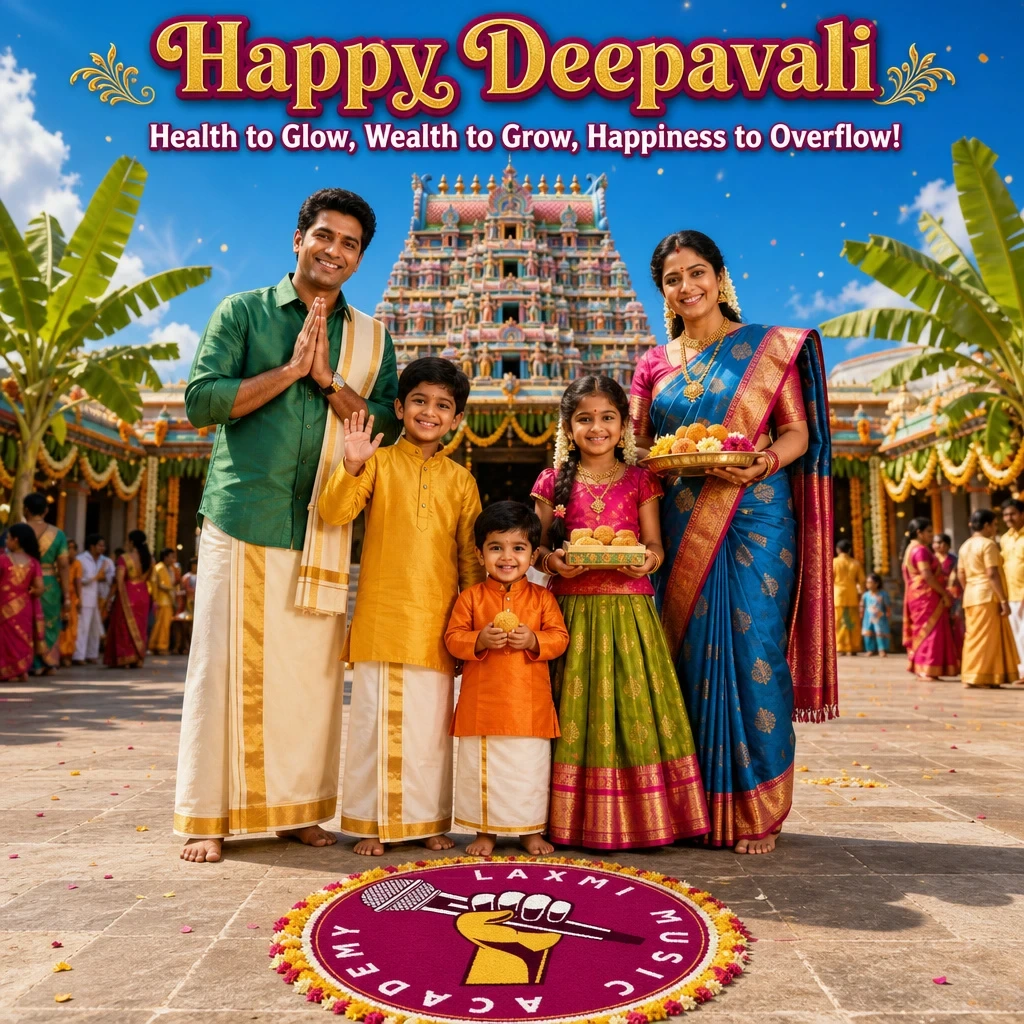
How We Celebrate Deepavali in Malaysia
How do Malaysians celebrate Deepavali? The oil bath, new clothes, prayers, kolam, oil lamps, sweets, murukku, Thala Deepavali and the warm open house.

Alankaram: Where Melody Meets Rhythm
What is Alankaram? The stage where swara patterns are set to the seven basic talas, and a student meets the many shapes of rhythm for the very first time.
Dhattu Varisai: Learning to Leap Between Notes
What is Dhattu Varisai? The stage where swaras stop moving in order and start jumping, and why this is the real bridge to singing actual songs.
Janta Varisai: Why Every Note Is Sung Twice
What is Janta Varisai? The second stage after Sarali Varisai, where every swara is sung twice, and why that simple doubling builds real vocal control.
Your First Carnatic Class: What Actually Happens
Nervous about your first Carnatic music class? Here is exactly what happens, what to bring, and why you will actually sing on day one. No surprises.
Thevaram: The Sacred Tamil Hymns
What is Thevaram? A gentle guide to the sacred Tamil hymns of the Nayanmars, sung in temples for over a thousand years, and their place in our music.
The 22 Srutis: The Notes Between the Notes
We sing seven swaras, so why do the old texts speak of 22 srutis? A friendly guide to the microtones hiding between the notes of Carnatic music.
How Carnatic Music Is Written Down
Does Carnatic music have sheet music? Yes, and no. A clear guide to Carnatic notation, what it shows, and why it deliberately leaves the most important part out.
Janya Ragas: The Beautiful Children of the Melakarta
What is a janya raga? A gentle guide to the child ragas born from the 72 parents, where most of the songs we actually sing quietly live.
The 72 Melakarta Ragas, Made Simple
72 ragas sounds terrifying until you see the system behind it. A simple, friendly explanation of the Melakarta scheme and why it is actually beautifully logical.
Carnatic vs Hindustani: What’s the Difference?
Carnatic or Hindustani? A clear, simple comparison of India's two great classical traditions, what they share, and what genuinely sets them apart.
Manodharma: The Art of Making It Up Beautifully
What is manodharma? A guide to Carnatic improvisation: alapana, niraval and kalpana swaram, and how singers create something new on the spot every single time.
Purandaradasa: The Father of Carnatic Music
Who was Purandaradasa? The saint-composer honoured as the father of Carnatic music, who gave every beginner the very first steps we still follow today.
Syama Sastri: The Rare Gem of the Trinity
Who was Syama Sastri? Meet the rarest of the Carnatic Trinity, known for tender melodies and intricate rhythms packed into just a handful of precious songs.
Muthuswami Dikshitar: The Grand, Unhurried Master
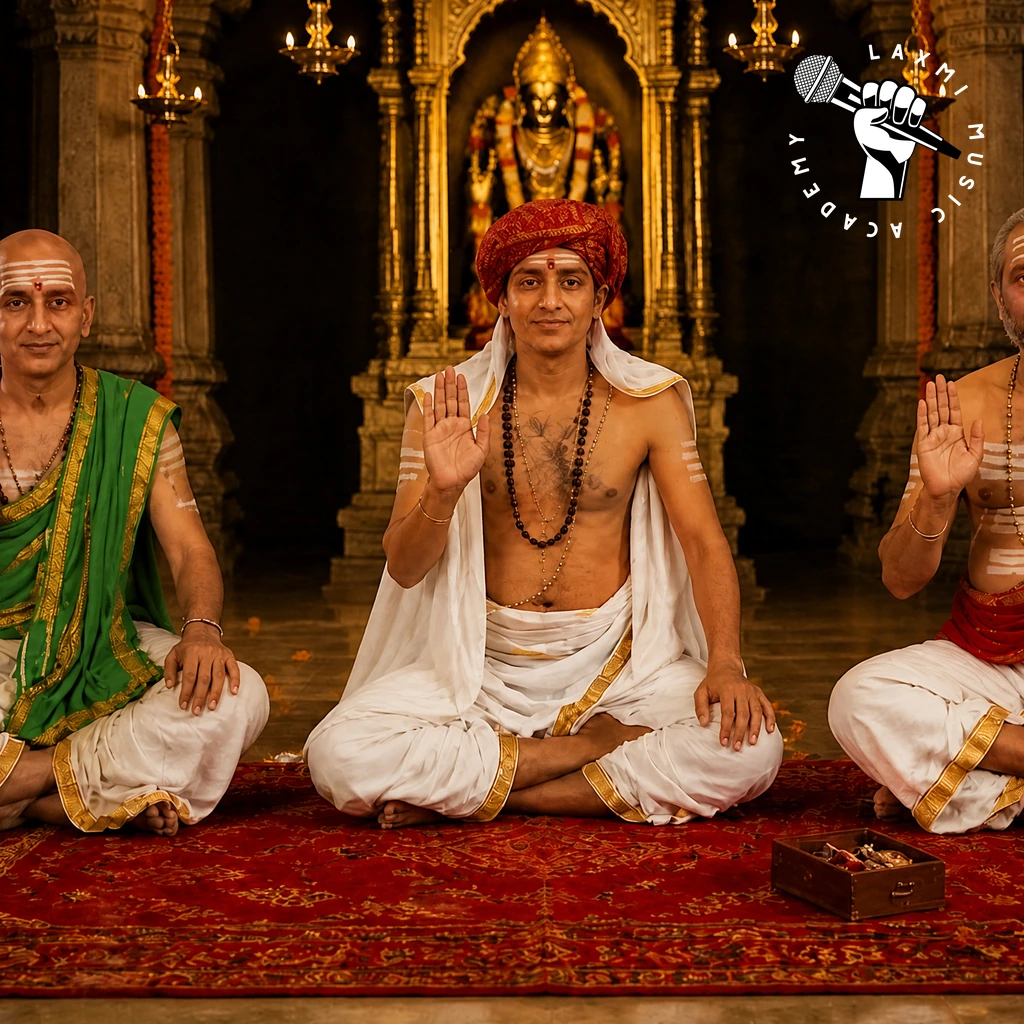
Who was Muthuswami Dikshitar? A clear, easy guide to the composer known for grand, stately kritis, temple imagery, and a touch of worldly influence.
Tyagaraja: The Saint Who Poured His Heart Into Song
Who was Tyagaraja? A gentle look at the saint-composer whose devotion shaped thousands of songs, and whose Pancharatna Kritis are still sung every year.
Kriti vs Kirtana: What’s Actually the Difference?
Kriti or Kirtana, what is the real difference? A clear, simple breakdown of these two Carnatic song forms and why the distinction actually matters.
The Instruments of Carnatic Music: Veena, Mridangam & Violin
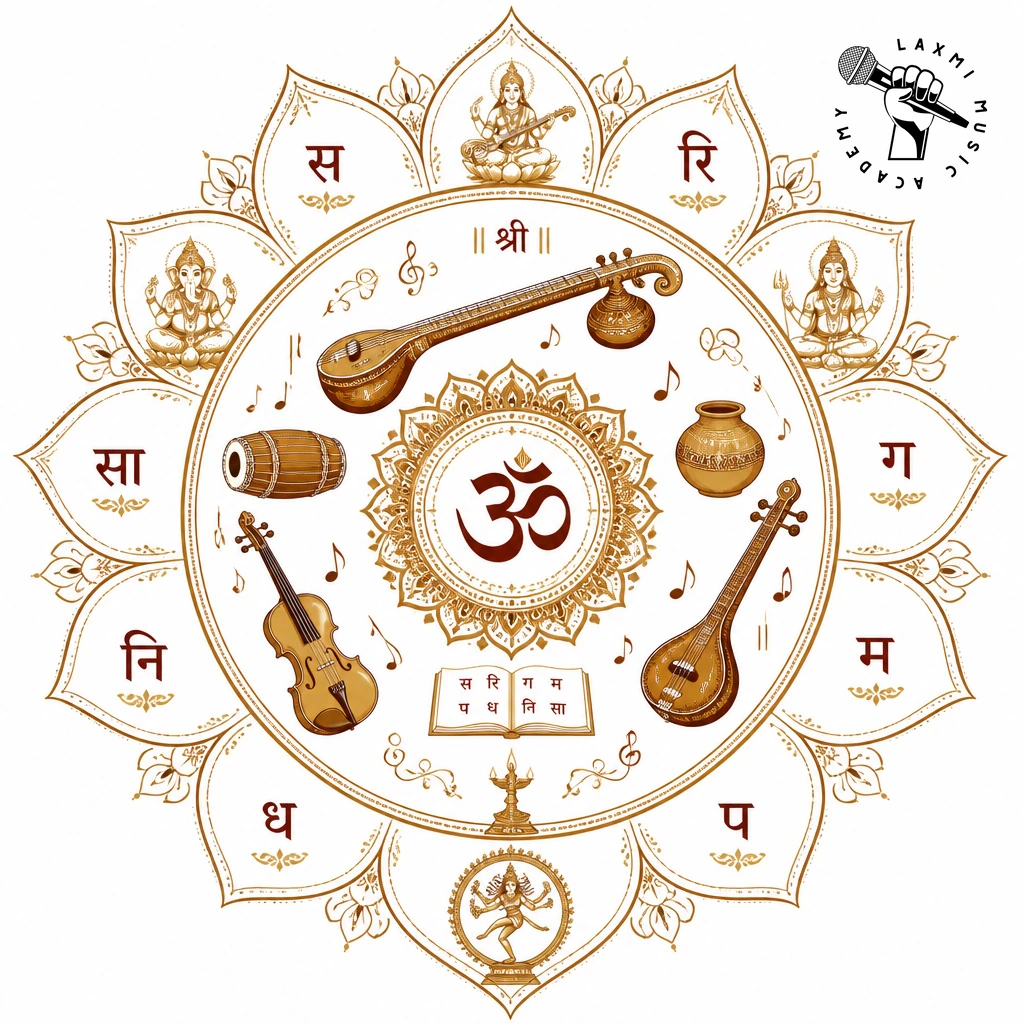
Meet the instruments of Carnatic music: the veena, mridangam and violin. A gentle guide to the sounds that accompany every song and the soul each one carries.
From Geetam to Varnam: What Comes After Sarali Varisai
What comes after Sarali Varisai? A clear, no-pressure guide to Geetam, Swarajati and Varnam, the next steps every Carnatic music student takes.
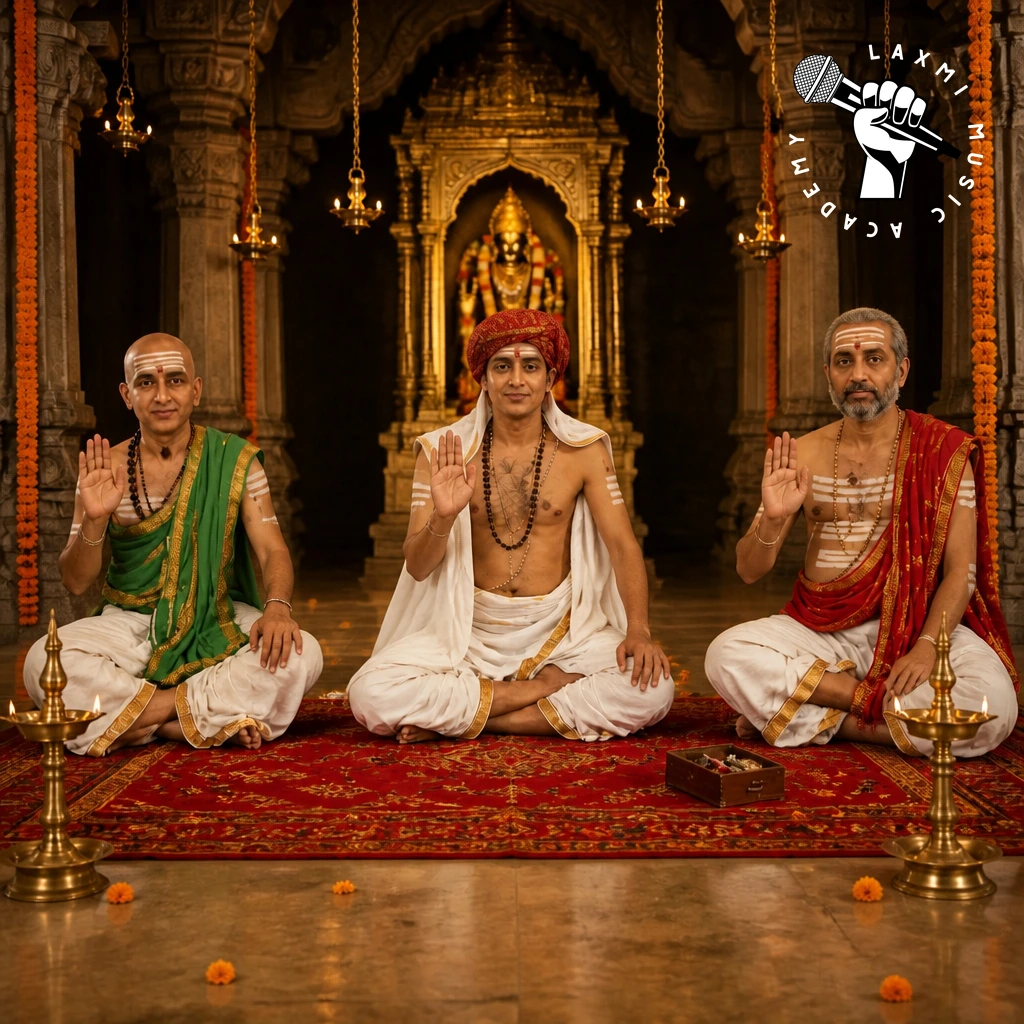
Meet the Trinity: Tyagaraja, Dikshitar & Syama Sastri
Who are the Carnatic Trinity? Meet Tyagaraja, Muthuswami Dikshitar and Syama Sastri, the three legendary composers whose songs are still sung in every class today.
The History of Carnatic Music: A Living Tradition
Where does Carnatic music come from? A gentle journey through its ancient roots, the Trinity of composers, and how this living tradition reaches us today.
7 Real Benefits of Learning Carnatic Music
More than just music: discover the real benefits of learning Carnatic music for kids, from focus and confidence to memory, discipline and cultural roots.

What Is Gamaka? The Secret That Makes Carnatic Music Sing
The graceful bends and slides that give every note its feeling. A gentle guide to gamaka, the true soul of Carnatic music.

Your First Carnatic Concert: A Gentle Guide to the Katcheri
Who is on stage, how a concert flows, and how to enjoy it as a complete beginner. A friendly, no-pressure guide to the katcheri.
What Is Sruti, and Why the Tanpura Never Stops
A gentle guide to sruti, the base pitch that anchors every Carnatic song, and why the drone hums on without ever stopping.
Keeping Time with Your Hands: A Friendly Guide to Tala
Why do Carnatic singers keep the beat with their hands? A simple guide to tala, Adi talam and the three little movements that hold the rhythm together.
What Is a Raga, Really?
More than a scale, a raga is a mood you can sing. A simple explanation of the “soul” of Carnatic music, with no theory required.
Why Every Journey Begins with Sarali Varisai
The humble first exercises every student sings, and why even masters of fifty years never leave them behind.
The Beginner’s Roadmap: From Sarali Varisai to Varnam
The whole learning journey on one page, from your child’s first note to their first varnam. A clear map for students and parents.