What Is Gamaka? The Secret That Makes Carnatic Music Sing
 By Mataji Laxmi · 14 July 2026 · 5 min read

Gamaka, the gentle movement that keeps a swara from ever sitting still.
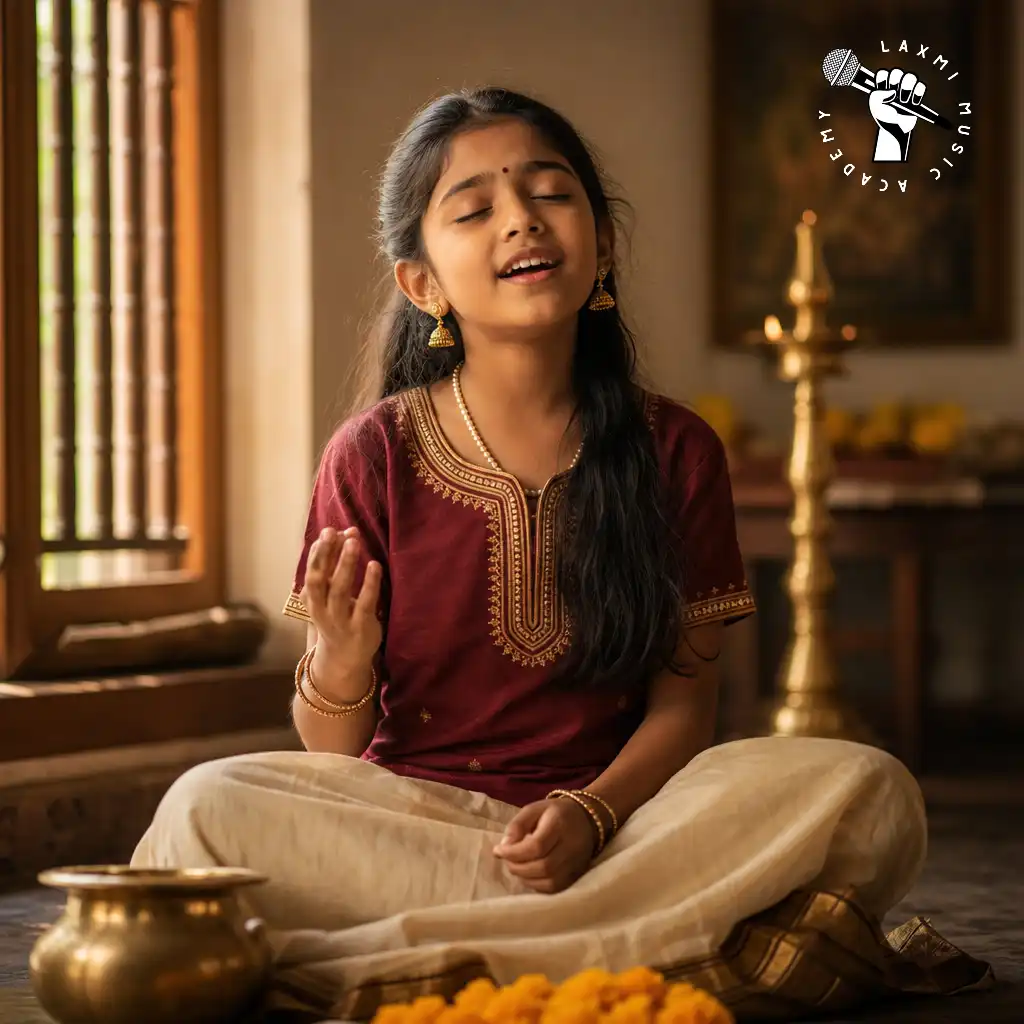
Listen closely to a Carnatic singer, and you will notice something wonderful: the notes are never quite still. A swara does not simply sound and stop. It bends, it slides, it trembles gently, like a flame moving in the breeze. That living movement has a name, my dear child. It is called gamaka, and it is the very breath of our music.
Many who are new to this tradition ask why Carnatic music sounds so different, so rich and full of feeling. The answer, almost always, is gamaka.
What is gamaka?
Gamaka is the graceful movement given to a note. Instead of striking a swara and holding it flat and plain, the singer approaches it with a curve, a slide, a soft shake, letting the note rise and fall around its true place. In much of Western music, a note is played and held steady. In ours, the note breathes. It has a life of its own.
You may think of it as the difference between speaking a word flatly and saying it with feeling. The word is the same, yet one touches the heart and the other does not.
Two gentle truths
First, gamaka is not decoration sprinkled on top of the music. It lives inside the note itself. The movement is part of what the swara truly is.
Second, gamaka is what makes a raga a raga. The very same swaras, shaped with different movements, become two entirely different ragas, each with its own mood.
Why gamaka is the heart of a raga
Here is one of the most beautiful ideas in all of our music. Two ragas may be built from the exact same set of notes, yet they can feel worlds apart, one tender, one majestic, one full of longing. How can this be, if the notes are the same? It is the gamaka that makes the difference. The way each note is bent, held and coloured carries the mood, the bhava, the feeling that the raga is meant to awaken.
This is why a raga can never be captured fully on paper. The notes are only the bones. The gamaka is the living flesh and the beating heart.
A swara without gamaka is like a word without feeling.

Did you know?
The old texts of our tradition name many kinds of gamaka, and often speak of ten principal ones, the dasavidha gamaka. Yet we do not teach a child to count them. We teach the ear to recognise them and the voice to sing them, the way one learns the warmth in a loved one’s voice without ever naming it.
How a child learns gamaka
Gamaka cannot be learnt from a rule or a page. It is passed from voice to voice. The child sits beside the teacher, listens, and echoes, again and gently again, until the voice begins to curve on its own. It is exactly how a small one learns to speak, not by studying grammar, but by loving imitation.
For this reason, gamaka comes slowly, and it must never be hurried or forced. It ripens quietly, in its own time, like fruit upon a tree. One day the child simply sings a phrase, and the movement is there, alive and natural, and the heart of the teacher rejoices.
The gift this brings to your child
To learn gamaka is to learn a rare and delicate listening. The ear grows refined, attentive to the smallest shade of feeling. The voice grows expressive, able to carry emotion, not just sound. A child who learns to sing with gamaka is learning, quietly, to feel deeply and to express that feeling with grace.
🎧 Simply listen together
There is nothing to rehearse and nothing to master at home. Gamaka is absorbed in class, seated beside the teacher, voice following voice.
If you wish, you and your child might listen together to a favourite song and simply notice how the singer’s voice never sits still, how it bends and glides from note to note. Not as a task, only as a small delight shared together. It is entirely optional, and never something to be pushed.
Come and hear it for yourself
Gamaka is one of those treasures that words can only gesture towards. It must be heard, and better still, felt, sitting in the room while a teacher sings a phrase and invites your voice to follow. Come to class, listen closely, and let the notes teach you how to breathe, the way they have taught singers for centuries.
Words to know
Gamaka, the graceful bends, slides and shakes given to a note, the movement that gives it feeling.
Swara, a musical note, one of the seven that form the foundation of a song.
Raga, the melodic mood of a piece, shaped as much by its gamakas as by its notes.
Bhava, the feeling or emotion that the music seeks to awaken.
Dasavidha Gamaka, the ten principal kinds of gamaka described in the classical texts.
Kampita, one common gamaka, a gentle oscillation of the voice around a note.
Your questions, answered
What is gamaka in Carnatic music?
Gamaka is the graceful movement of a note, the bends, slides and gentle shakes that a singer adds to a swara. Instead of sitting still, the note curves and breathes, and this movement gives Carnatic music its distinctive feeling.
Why is gamaka so important?
Gamaka carries the emotion of a raga. Two ragas can share the very same swaras yet feel completely different, because each note is bent and shaped in its own way. Without gamaka, a raga loses its soul.
Can gamaka be written down or learnt from notation?
Only partly. Notation can hint at a gamaka, but its true shape lives in the voice. Gamaka is learnt by listening closely to a teacher and echoing them, the way a child learns to speak, not by reading rules on a page.
Does my child need special training or homework to learn gamaka?
No. Gamaka is absorbed gently in class, sitting beside the teacher and imitating their voice. Nothing needs to be rehearsed at home. It comes slowly and naturally, and can never be forced.
Wish to hear gamaka come alive?
The beauty of gamaka truly opens up with a teacher beside you. Send us a message on WhatsApp, and we will lovingly help you or your child begin, online, or here with us in Puchong.
💬 WhatsApp Us
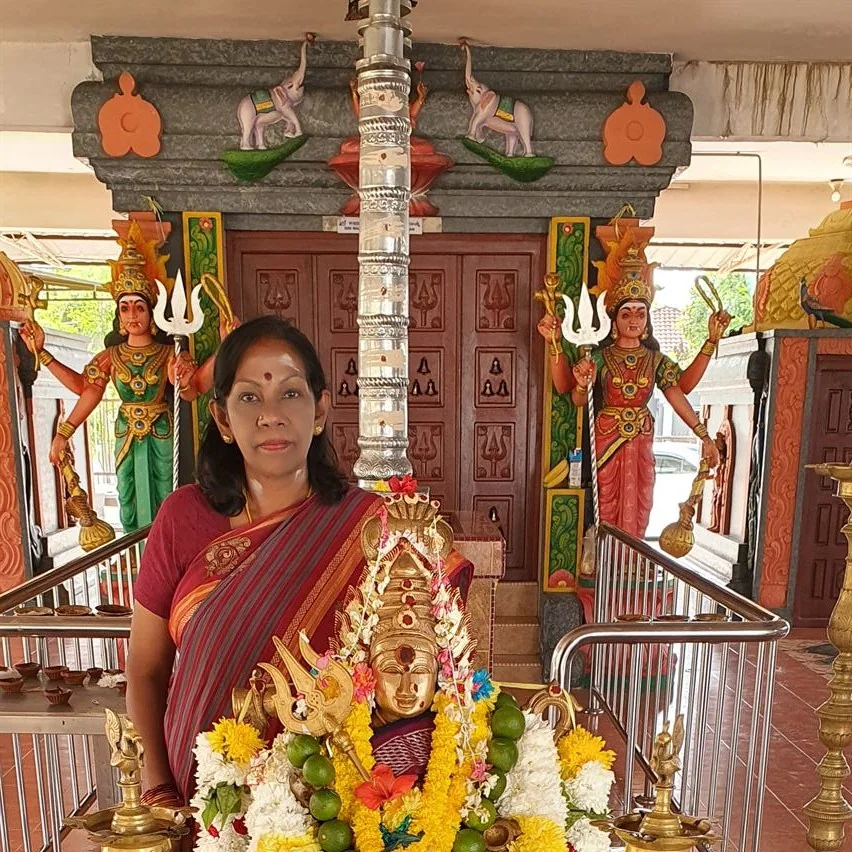
Mataji Laxmi
Mataji Laxmi is the founder and guiding guru of Laxmi Music Academy in Puchong. A lifelong devotee of Carnatic music, she has nurtured generations of students with warmth and devotion, keeping this beautiful tradition alive for the young.