What Is Sruti, and Why the Tanpura Never Stops
 By Mataji Laxmi · 12 July 2026 · 5 min read
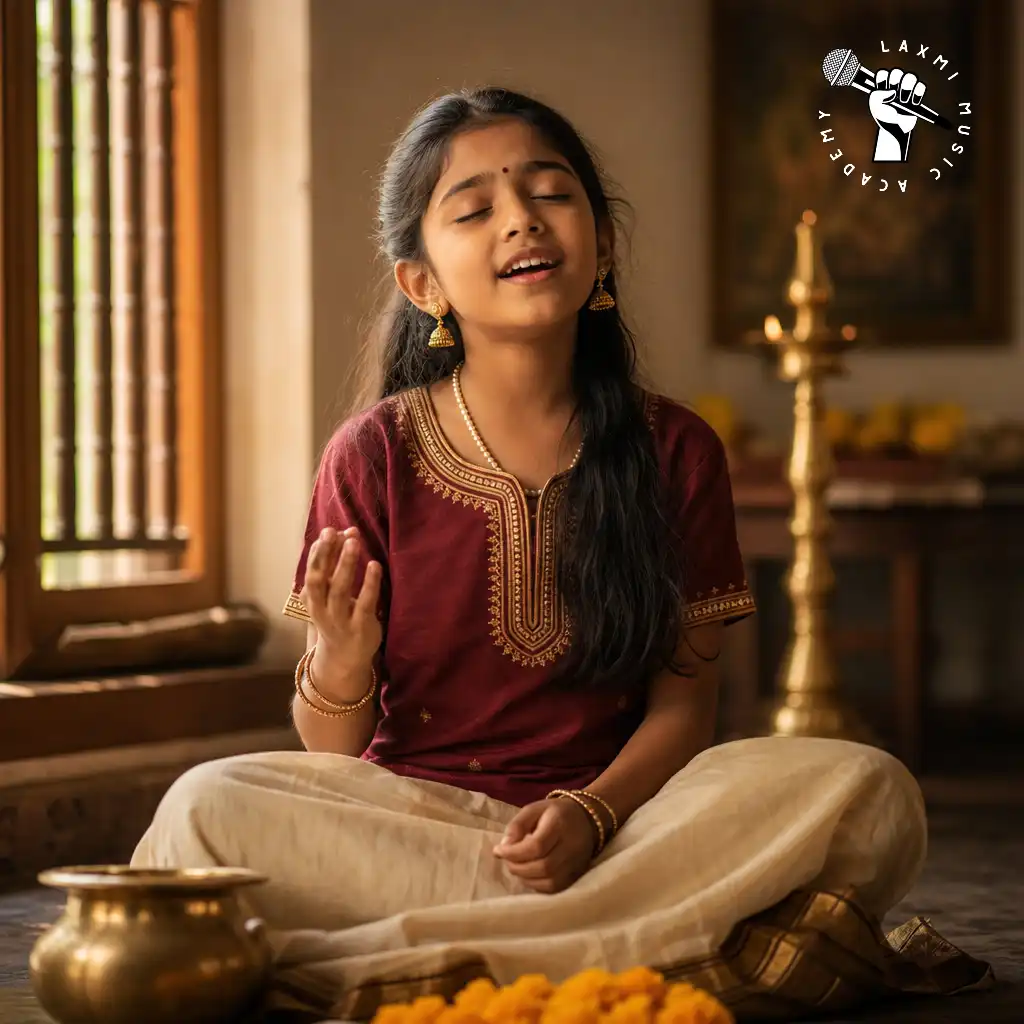
A young singer at rest within her sruti, the steady pitch that holds every note.
Sit in any Carnatic class or concert and you will hear it before anything else: a soft, unbroken hum in the background, gentle as breath. That sound is the sruti, and it never stops. My dear child, it is one of the most beautiful ideas in all of our music, and it carries a quiet lesson about life itself.
Let us take it slowly, the way we take everything in this tradition, with patience and an open heart.
What is sruti?
Sruti is the pitch, the single steady note that everything else is measured against. When a singer sits down, they first choose their sruti, the note they will call Sa, their home. Every swara they sing, every raga they shape, rests upon this one foundation tone. Without it, the voice would have nothing to hold on to.
You may think of it as the ground beneath a temple. You do not always look at the ground, yet every pillar, every carving, every prayer stands upon it.
Two gentle truths
First, the sruti is your own. It is chosen to suit your voice, so a small child and an elder may sing the very same song, each resting on the pitch that feels natural to them.
Second, once chosen, it stays constant. It is the still point around which the whole song turns.
Why the tanpura never stops
To hold the sruti steady, we use a drone, traditionally the tanpura, though today a simple sruti box often does the same gentle work. It sounds the home note softly and continuously, on and on, never pausing, for the entire length of a song.
Why never stop? Because the moment the drone falls silent, the ear begins to drift, and the voice slowly loses its way. The unbroken hum is like a loving hand upon the shoulder, always there, quietly reminding the singer where home is. As long as it sounds, you can never truly be lost.
The drone never stops, so that the singer is never lost.
Did you know?
In Western music, everyone tunes to one fixed pitch. In our tradition, the sruti bends to suit each singer’s own voice. The music adjusts itself to the person, never the other way around, a small act of kindness woven into the art itself.
Staying in tune with yourself
There is a deeper beauty here, one I love to share with my students. To sing well is not to chase the drone, nor to fight it. It is to rest within it, to let your voice settle into that steady sound until the two become one. The old masters called this Nada, sacred sound, and treated singing as a form of worship, a way of tuning not only the voice, but the heart.
When your voice sits perfectly upon the sruti, something settles inside you too. The mind grows quiet. That is the gift the drone offers, if only we are willing to listen.

The gift this brings to your child
Learning to sing with a drone teaches a rare kind of listening, the patience to hold steady, to stay true to one gentle sound amid everything else. A child who learns this grows more attentive, more centred, more at peace. It is training for the ear, yes, but also, quietly, for the soul.
🎧 Simply sit and listen
There is nothing to rehearse and nothing to master at home. Everything unfolds in class, seated beside a teacher, with the drone humming softly between you.
If you wish, you and your child might sit quietly for a single minute and listen to a recording of a tanpura drone. Not as a task, only as a small moment of stillness. But it is entirely optional, and never something to be pushed.
Come and feel the stillness
Sruti is one of those things that words can only point towards. It must be felt, sitting in the room, letting the drone wrap around you while a teacher gently guides your voice to rest upon it. Come to class, sit with the sound, and let it teach you the way it has taught singers for centuries.
Words to know
Sruti, the base pitch, the fixed reference note a singer tunes to and returns to.
Tanpura, the long-necked drone that sounds the sruti continuously.
Sruti box, a small electronic drone that holds the pitch, often used today in place of a tanpura.
Adhara Shadja, the chosen home note, the singer’s Sa.
Nada, sacred sound, the spiritual heart of Indian music.
Nadopasana, worship offered through sound, treating music as a path to the divine.
Your questions, answered
What is sruti in Carnatic music?
Sruti is the base pitch, the fixed reference note that a singer tunes to and returns to. It is usually called their Sa, and everything they sing is measured against it.
What is the tanpura, and why does it play continuously?
The tanpura is a long-necked drone that sounds the sruti without stopping, holding the home note softly in the background so the singer always has a steady pitch to stay true to.
Is the sruti the same for everyone?
No. The sruti is chosen to suit each singer’s own comfortable voice, so the music adjusts to the person, not the other way around.
Does my child need a tanpura at home?
No. In class we provide the drone, so nothing needs to be bought or done at home. Everything is taught and felt together in the lesson.
Wish to feel the sruti for yourself?
The stillness of the drone truly opens up with a teacher beside you. Send us a message on WhatsApp, and we will lovingly help you or your child begin, online, or here with us in Puchong.
💬 WhatsApp Us
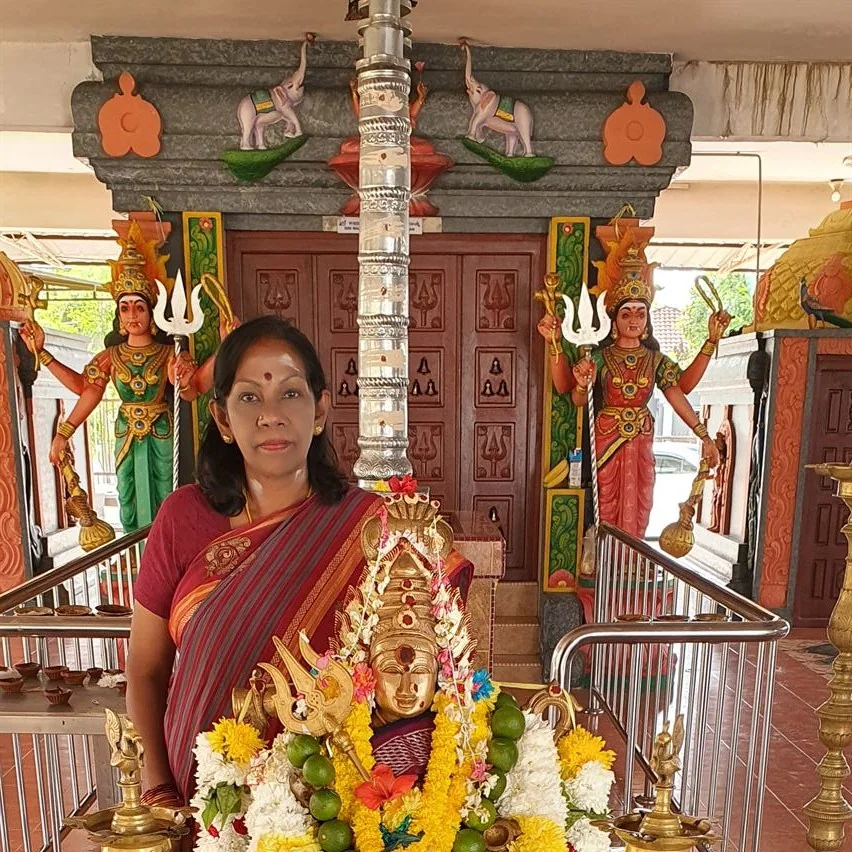
Mataji Laxmi
Mataji Laxmi is the founder and guiding guru of Laxmi Music Academy in Puchong. A lifelong devotee of Carnatic music, she has nurtured generations of students with warmth and devotion, keeping this beautiful tradition alive for the young.