What Is a Raga, Really?
 By Mataji Laxmi · 9 July 2026 · 5 min read
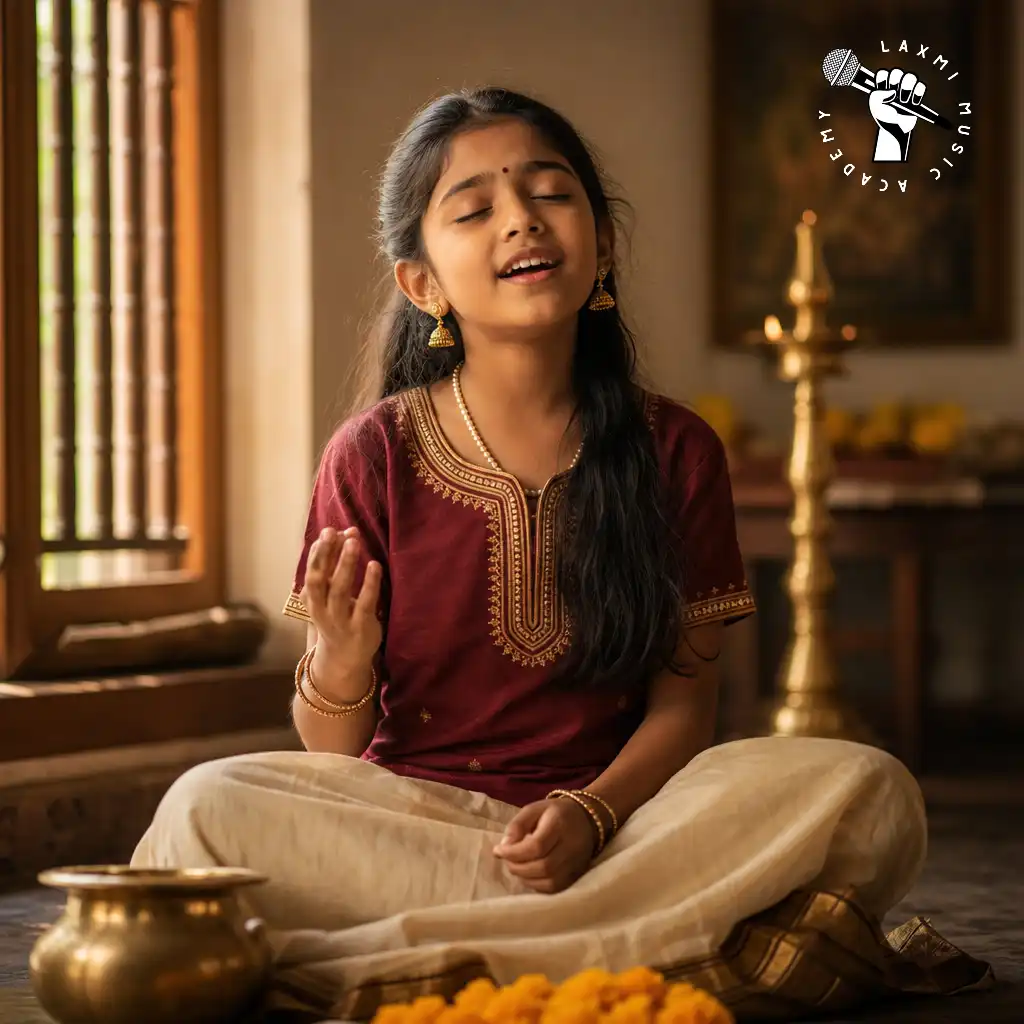
If swaras are the colours, a raga is the painting they make together.
“Raga” is one of the first sacred words you will hear in a Carnatic class, and to many it sounds like a mystery reserved for the learned. My dear child, it is not. By the end of this gentle reading, you will not only understand what a raga is. You will realise your own heart has been touched by ragas all your life.
Let us begin softly, with the simplest truth, and then let it unfold like a flower.
More than a scale, it’s a mood
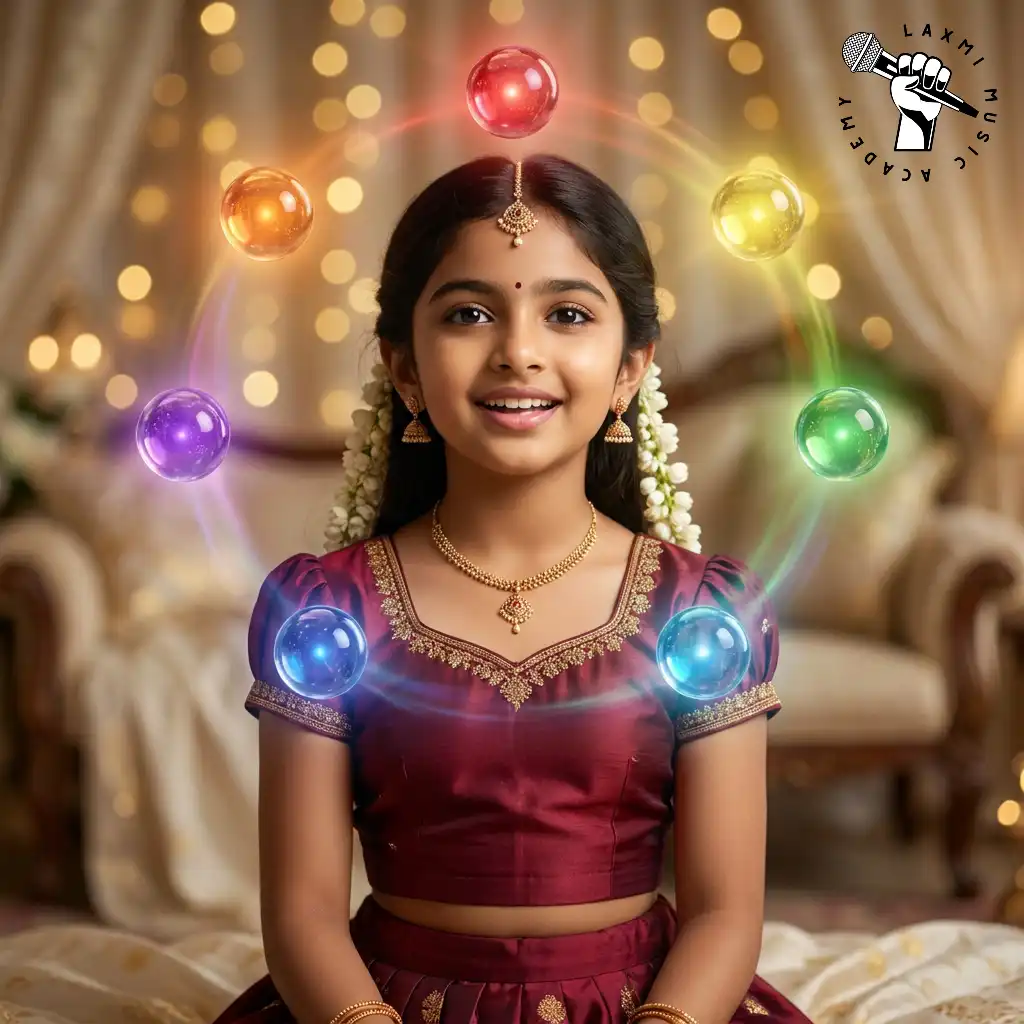
You may already have met the seven swaras, Sa Ri Ga Ma Pa Dha Ni. A raga is born when we take a chosen few of these sacred sounds and honour a particular way of moving among them. Yet here lies its soul: a raga is never merely a list of notes. A raga carries a feeling. A living spirit. A mood into which you may quietly step.
Some ragas shine bright and joyful, like the first sunlight upon the courtyard. Some feel serene and devotional, the way a temple breathes in the stillness of dawn. Some hold a gentle ache, the sweet longing of a soul that misses the one it loves. That inner colour is the true soul of a raga, and it is nothing less than a form of prayer.
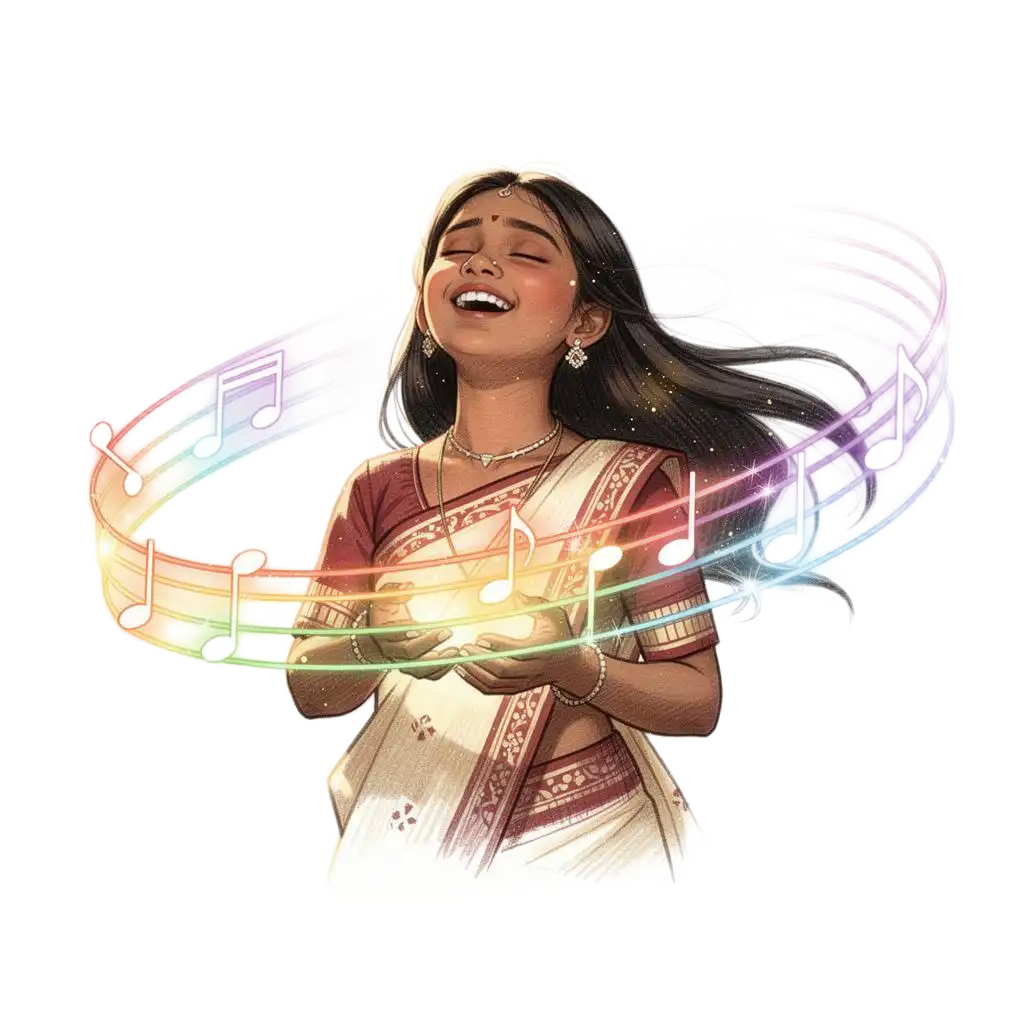
A scale is but steps of stone. A raga is a living spirit you may sing.
So how is one raga different from another?
Three gentle things give each raga its own face, and you need no theory, only an open heart, to feel them:
- Which notes it uses. Some ragas use all seven swaras, others leave a few out, like a recipe that skips certain spices.
- How it walks up and down, a raga has its own way of climbing (arohanam) and coming back down (avarohanam). Some go straight, some zig-zag.
- Its little bends and graces, the gamakas, the slides and shakes on certain notes, that make a raga unmistakably itself.
Change even one of these, and the whole mood is transformed. It is like two devoted cooks blessed with the same vegetables, the ingredients are the same, yet what is placed before you tastes worlds apart.
Did you know?
Our tradition arranges every raga upon a magnificent “family tree” of 72 parent scales called melakarta. From these 72 mothers, thousands of ragas are born, which is why even a lifetime of devotion is never quite enough to know them all.
You already know ragas
This is the truth I most love to share with my students. You need no training to feel a raga, the soul knows it on its own. Think of a devotional song that hushes the whole household into stillness. Think of a joyful film tune that lifts a child to dance. Think of a lullaby that carries a baby gently into sleep. Each of these lives within a raga, and your heart has always known the difference.
When we learn Carnatic music, we are simply giving a name and a form to something the heart has always understood. That is all. The mystery dissolves, and what remains is quiet joy.
The gift this brings to you (and your child)
Learning to recognise ragas awakens a rare sensitivity of the heart, the ability to notice, name and honour feeling, in music and in life. A child who trains the ear this way grows more expressive, more compassionate, more at peace upon the stage. They are not merely singing notes; they are learning to offer a feeling to an entire room.
🎧 Simply listen together
Nothing to rehearse, nothing to master, only two gentle minutes of listening beside your child:
- Play any two very different songs, say, a bright festival song and a slow devotional one.
- Ask: “What does this one make you feel? Happy? Peaceful? A little sad?”
- There are no wrong answers. You are simply letting the heart notice mood, the very first step upon the path of ragas.
A whole world, one raga at a time
There are hundreds of ragas, and no lifetime is long enough to exhaust their beauty, and that is the very blessing that keeps musicians devoted to this art for fifty, sixty years and more. But we do not meet them all at once. We meet them one by one, as we would dear friends, each with its own spirit. And it all begins with those same seven sacred swaras you already carry within you.
Words to know
Raga, a set of notes with a special way of moving, carrying its own mood or feeling.
Arohanam, the way a raga climbs upward.
Avarohanam, the way a raga comes back down.
Gamaka, the graceful bends and slides on a note that give a raga its personality.
Your questions, answered
What is a raga in simple words?
A raga is a set of notes with a special way of moving up and down that together create a particular mood or feeling. It’s more than a scale. It has a personality you can hear and feel.
What is the difference between a raga and a scale?
A scale is just a ladder of notes. A raga uses a scale but adds a mood, rules for how to move between the notes, and graceful ornaments called gamaka that give it a unique character.
How many ragas are there in Carnatic music?
There are hundreds in common use, all organised under a system of 72 parent scales called melakarta. New ragas can even be created, so the number keeps growing.
Can a beginner learn to recognise ragas?
Yes. It starts simply by noticing the mood of a song. With regular listening and a teacher’s guidance, students gradually learn to recognise individual ragas by ear.
Wish to hear the ragas up close?
The true joy of ragas unfolds with a teacher beside you. Send us a message on WhatsApp, and we will lovingly help you or your child begin, online, or here with us in Puchong.
💬 WhatsApp Us
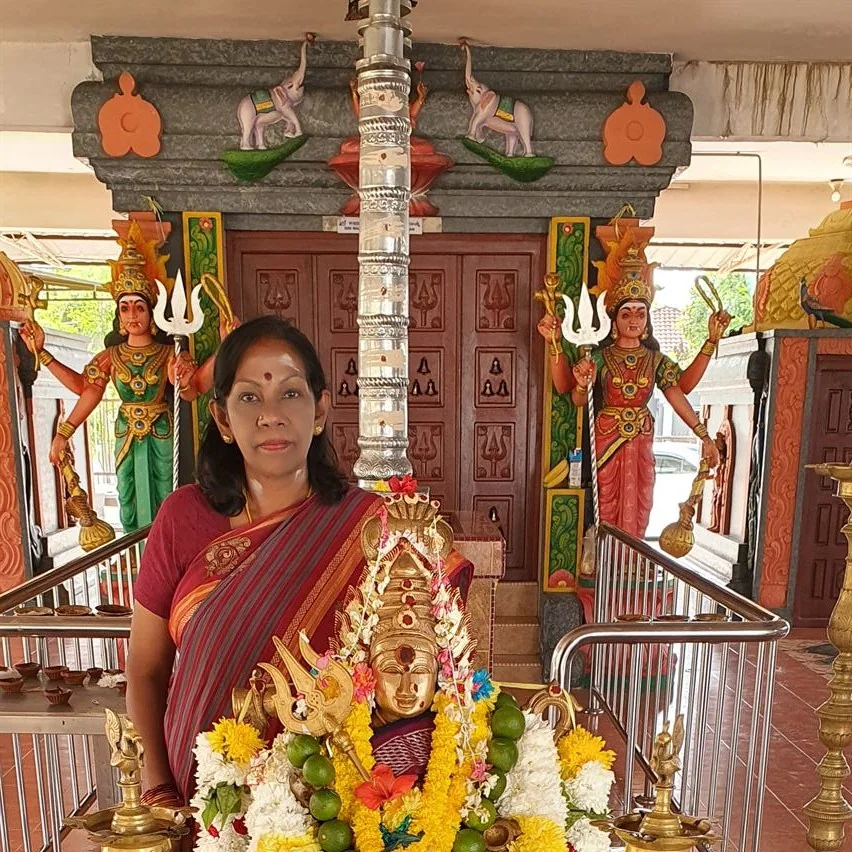
Mataji Laxmi
Mataji Laxmi is the founder and guiding guru of Laxmi Music Academy in Puchong. A lifelong devotee of Carnatic music, she has nurtured generations of students with warmth and devotion, keeping this beautiful tradition alive for the young.