Keeping Time with Your Hands: A Friendly Guide to Tala
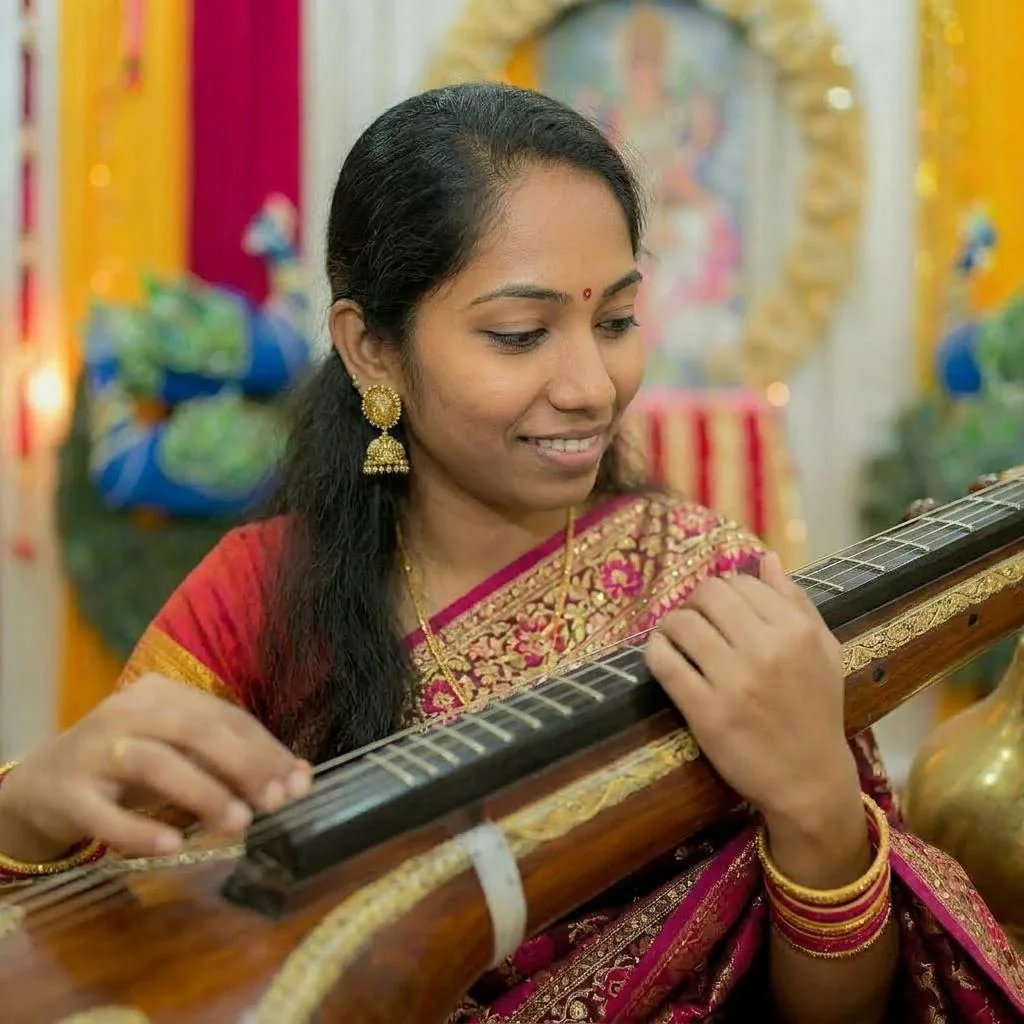 By Teacher Nanthini · 12 July 2026 · 5 min read

Purandaradasa, who shaped the very tala system we still keep time by today.
Here’s a fun truth: your body already knows how to keep time. Ever tapped your foot to a song without thinking about it? Nodded along to a beat? That instinct is exactly what tala is built on. In Carnatic music we simply give it a shape, and we do it with our hands.
When students first watch us tapping, clapping and counting on our fingers mid-song, they think it looks complicated. It really isn’t. By the end of this, you’ll know exactly what those hand movements mean, and why they’re secretly one of the coolest things about our music.
So, what is tala?
Tala is the rhythm, the steady heartbeat that runs underneath every Carnatic song. The melody is the swaras, the tune you sing. The tala is the beat those swaras sit on top of. Every song has both, working together.
What makes Carnatic music special is that we keep the beat visibly, with our hands, right there on the lap. No metronome, no tapping foot needed. Your hand becomes the clock.
Three hand actions, that’s it
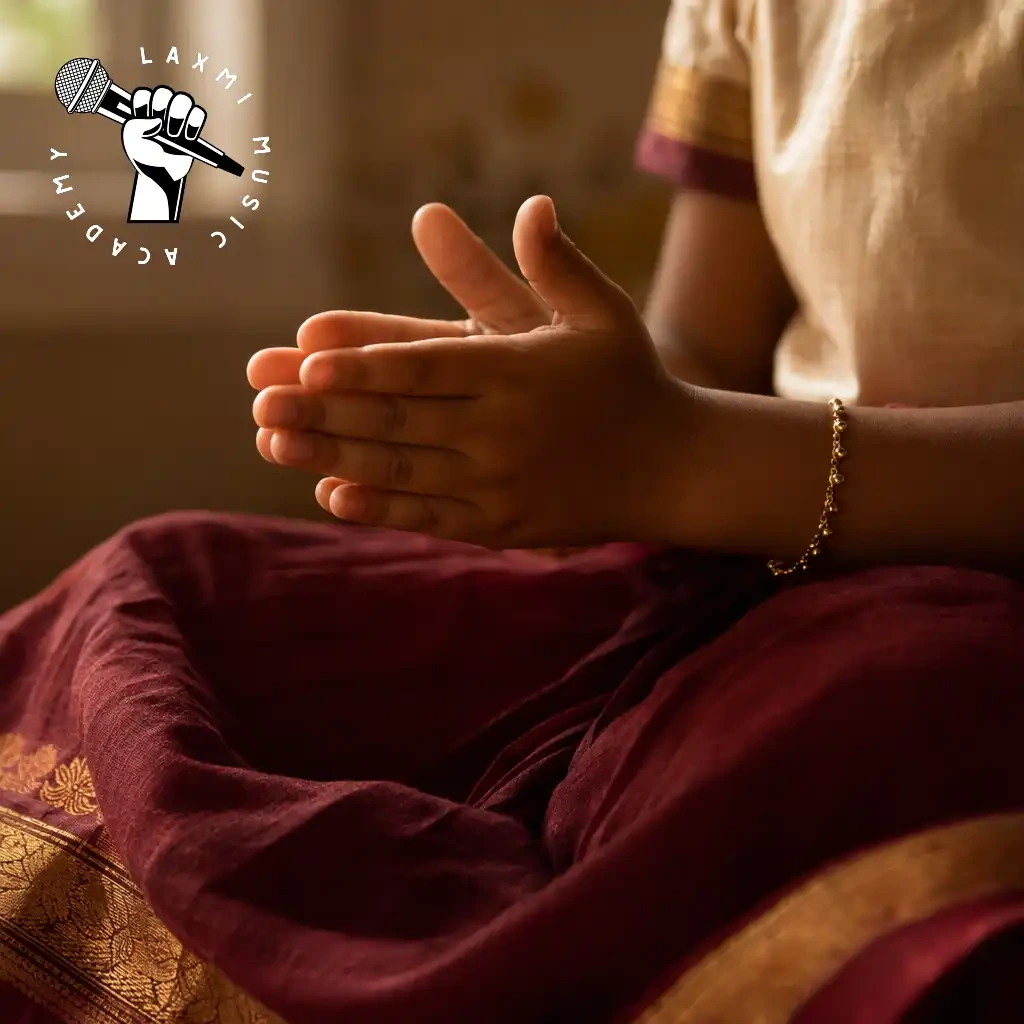
Keeping tala uses just three simple movements: a clap (palm down on your lap), a wave (flip the same hand palm up), and finger counts (tap your fingers one by one).
String those three together in a set pattern, repeat it, and you’re keeping tala. That repeating pattern is called an avartanam, one full round of the beat.
Meet Adi talam, your first one
There are many talas, but almost everyone starts with the same one: Adi talam. It’s an eight-beat cycle, and it’s the rhythm behind a huge chunk of Carnatic music, including the very first sarali varisai.
Here’s how the eight beats go: a clap plus three finger counts (that’s four beats), then a clap and a wave (two beats), then another clap and a wave (two beats). Four, then two, then two. Eight in total. Loop that, and you’re riding Adi talam like a pro.
The melody is the story. The tala is the heartbeat underneath it.
Did you know?
Long ago there were said to be 108 different talas, which is a lot to keep track of. The saint-composer Purandaradasa simplified the whole system down to seven core talas for beginners. Once again, the grandfather of our music was looking out for us.
Why keeping tala actually matters
It’s tempting to think of rhythm as the boring part, the thing that just sits in the background. Nope. Tala is what keeps a whole group of singers together, what lets a mridangam player and a vocalist lock in perfectly, and what makes a performance feel alive instead of wobbly. A singer with a strong sense of tala never gets lost, ever.
Why this is secretly great for your child
Keeping tala trains the brain and body to work as a team: coordination, counting and focus, all at once. Kids who grow up with a strong sense of rhythm often find maths patterns easier and pick up other instruments faster. It’s rhythm, but it’s also quiet coordination training in disguise.
🎧 Just feel it, no drills
You don’t need to sit your child down and make them count beats at home. That kind of pressure is exactly what we avoid. All the tala they need is taught, felt and repeated right there in class.
If they naturally start tapping along to a song in the car, or clapping to music they love, that’s the best thing in the world. Let it stay playful. Rhythm is meant to be felt, never forced.
It all clicks in class
Tala is one of those things that sounds tricky on paper but feels completely natural the moment a teacher guides your hand through it. Within a few classes, most students are keeping Adi talam without even thinking about it. Come to class, follow along, and let your hands learn the rhythm the way they were always meant to.
Words to know
Tala, the rhythmic cycle, the steady beat underneath a Carnatic song.
Talam, the same word, often used when naming a specific cycle, as in Adi talam.
Adi talam, the most common cycle, counted in eight beats.
Avartanam, one complete round of a tala cycle.
Laya, the underlying tempo or speed of the beat.
Your questions, answered
What is tala in Carnatic music?
Tala is the rhythmic cycle, the steady beat that runs underneath the melody. While the swaras give a song its tune, the tala gives it its heartbeat, kept visibly with the hands.
What is Adi talam?
Adi talam is the most common rhythmic cycle in Carnatic music, counted in eight beats: a clap and three finger counts, then a clap and a wave, then a clap and a wave. It is the rhythm behind most beginner lessons.
Why do singers keep the beat with their hand?
Keeping tala by hand gives the singer a steady visible frame to sit inside, so they never lose their place. It also keeps a whole group of musicians perfectly together, without needing a metronome.
Does my child need to do this at home?
No. Tala is taught, felt and repeated in class, with a teacher guiding their hand. If your child naturally taps or claps along to music at home, that’s lovely, but it is entirely optional and never homework.
Ready to feel the rhythm?
Tala clicks fastest with a teacher guiding your hand in real time. WhatsApp us and we’ll help you or your child get started, online or here in Puchong. Let’s get into it.
💬 WhatsApp Us
Teacher Nanthini
Teacher Nanthini teaches veena and Carnatic vocal at Laxmi Music Academy in Puchong. With a warm, encouraging style, she loves guiding beginners through their very first notes, turning nervous starts into real, joyful music.