Why Every Journey Begins with Sarali Varisai
 By Master Bala · 9 July 2026 · 5 min read
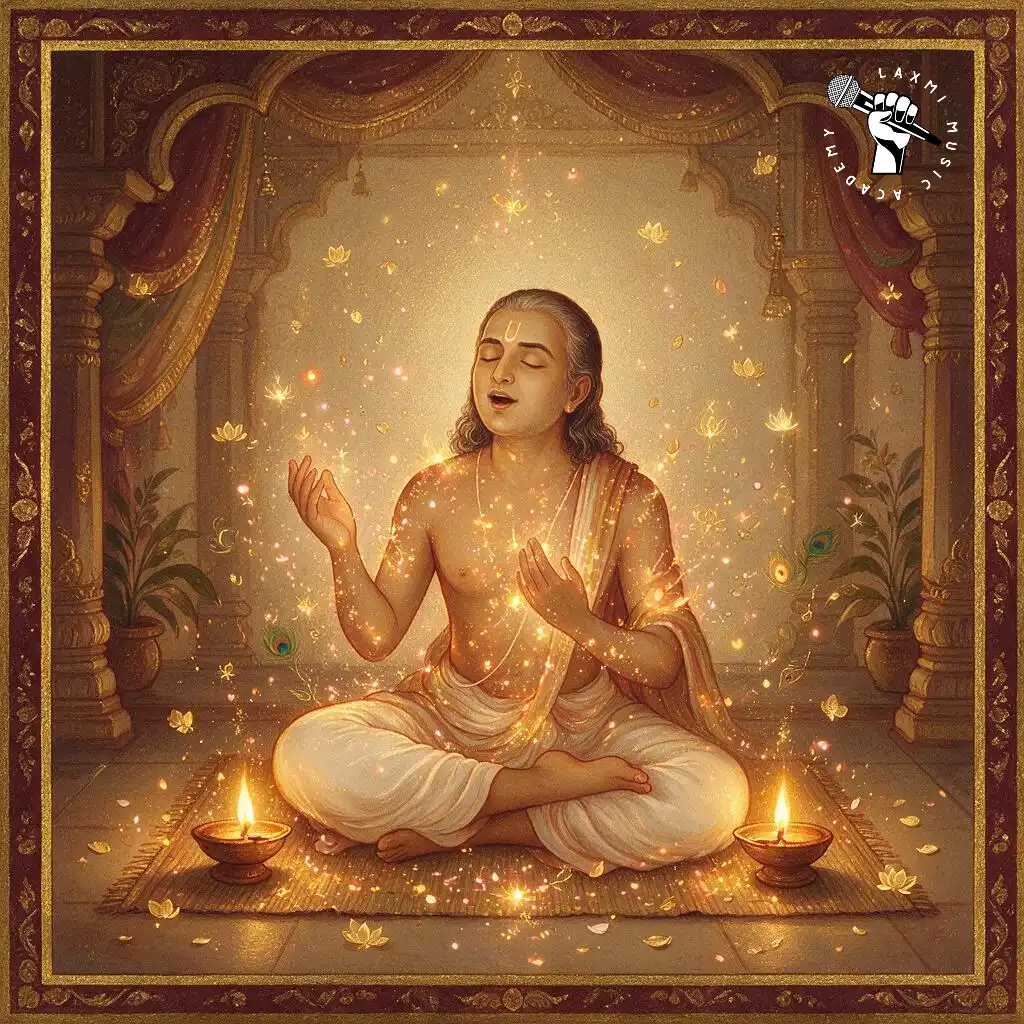
Purandaradasa, the saint-composer who shaped these very first lessons, five centuries ago.
Walk past any Carnatic classroom and you’ll hear it, a young voice climbing up and down the notes: “Sa Ri Ga Ma, Sa Ri Ga Ma…” These are the sarali varisai, the very first lessons every single student learns. They look too simple to matter. Trust me. They matter more than almost anything else.
Parents ask me all the time, “When will my child sing a real song?” I always tell them the same thing: soon, but first we lay a foundation strong enough to hold one. No shortcuts here, and honestly, that’s a good thing.
What exactly are sarali varisai?
Think of them as the alphabet of Carnatic music. The sarali varisai are simple patterns built from the seven swaras, sung slowly and evenly, step by step. The first one is as plain as it gets, straight up the notes and straight back down. The next adds a small twist, the one after a slightly bigger one, and the patterns keep levelling up, one careful step at a time.
They’re set to a steady beat, so from your very first lesson you’re training two things at once: your voice to find the right notes, and your sense of rhythm to keep good time. Two skills, one humble exercise. You love to see it.
The two names to remember
Every sarali varisai is set to one raga and one talam: they are sung in Mayamalavagowla raga, and kept in Adi talam, an eight-beat cycle.
Mayamalavagowla is chosen because its notes sit at even distances from one another, so a beginner’s voice learns to land on each one cleanly. Adi talam gives that voice a steady eight-beat frame to sit inside.
Learn these two names early. You will meet them again in almost every lesson that follows.
Why start here, of all places?
Simple: you can’t build a solid house on shaky ground. The sarali varisai quietly teach your voice everything it’ll need later:
- To land cleanly on each note, without sliding or guessing.
- To move smoothly from one note to the next.
- To stay in perfect time with the beat.
- To build the stamina to sing for longer and longer.
Here’s the part I love: these exercises were shaped nearly five hundred years ago by the great composer Purandaradasa, the grandfather of our music. The exact pattern your child sings on day one has been handed down, teacher to student, for five centuries. That’s history you can literally sing, kinda goated when you think about it.
The strongest singers? Almost always the ones who never rushed past the basics.
Did you know?
The sarali varisai were shaped nearly 500 years ago by the saint-composer Purandaradasa, the grandfather of Carnatic music. The very first exercise your child sings today is almost exactly what students were singing back in the 1500s.
The secret: nobody outgrows them
Here’s what surprises new students most: you never actually “finish” the sarali varisai and leave them behind. The finest pros, artists who’ve performed for fifty years, still warm up with these exact patterns before a concert. Like an athlete stretching before a race, they come back to the basics to keep the voice loose, honest and sure.
So if the early days feel repetitive, don’t stress, you’re not stuck, you’re building something that’ll serve you for the rest of your musical life. The repetition is the progress. That’s the whole cheat code.
Why this is secretly good for you (and your child)
The unhurried way we learn sarali varisai teaches patience and steady effort, the quiet satisfaction of getting a little better each lesson. Kids who come to enjoy this slow, sure way of learning carry that mindset into their studies and their whole lives. It’s where talent turns into character.
🎧 And no, there’s no homework
Let me say this plainly, because parents worry about it: your child does not need to sing at home. Every repetition they need happens in class, with a teacher listening closely and correcting gently.
If they sing at home because they want to, wonderful, but it stays their choice. The moment singing becomes a chore someone is nagging them about, we’ve lost the very thing we’re trying to give them: the joy of it.
A foundation you’ll be grateful for
One day, sooner than you think, your child will sing their first real song, and it’ll come out clear, confident and true. When that day lands, it’ll be because of these small, patient beginnings. The sarali varisai are where the music quietly takes root. Give it time, keep turning up to class, and watch what grows.

Words to know
Sarali varisai, the first, simplest note-pattern exercises every beginner learns.
Varisai, a graded series of exercise patterns.
Purandaradasa, the 15th-century composer who shaped these beginner lessons; called the grandfather of Carnatic music.
Mayamalavagowla, the beginner’s raga; its evenly spaced notes make each one easy for a new voice to find.
Adi talam, the most common rhythmic cycle in Carnatic music, counted in eight beats.
Abhyasa gana, the family of exercises (like sarali varisai) that build a singer’s foundation.
Your questions, answered
What are sarali varisai?
Sarali varisai are the first, simplest note-pattern exercises every Carnatic student learns, steady patterns of the seven swaras that train the voice and the sense of rhythm.
Why do beginners start with sarali varisai?
Because they build the essential foundation: hitting each note cleanly, moving smoothly between notes, and keeping steady time. Everything a student learns later rests on this base.
Which raga and talam are sarali varisai set to?
They are sung in Mayamalavagowla raga and kept in Adi talam, an eight-beat cycle. Mayamalavagowla is chosen because its notes are evenly spaced and easy for a beginner’s voice to find, and Adi talam gives that voice a steady frame to keep time against.
Does my child need to sing at home?
No. Everything is taught and repeated in class, with a teacher listening closely. If your child feels like singing at home, that’s lovely, but it is entirely optional, never homework, and never something to be pushed.
Ready to lay a strong foundation?
A good start makes all the difference, and it begins with the right guidance. WhatsApp us and we’ll help you or your child take that first step, online or here in Puchong. We got you.
💬 WhatsApp Us
Master Bala
Master Bala carries the timeless tradition of Carnatic music to a new generation at Laxmi Music Academy in Puchong, teaching with patience and devotion, and guiding each student from their very first note all the way to the stage.