Your First Carnatic Concert: A Gentle Guide to the Katcheri
 By Master Bala · 14 July 2026 · 5 min read

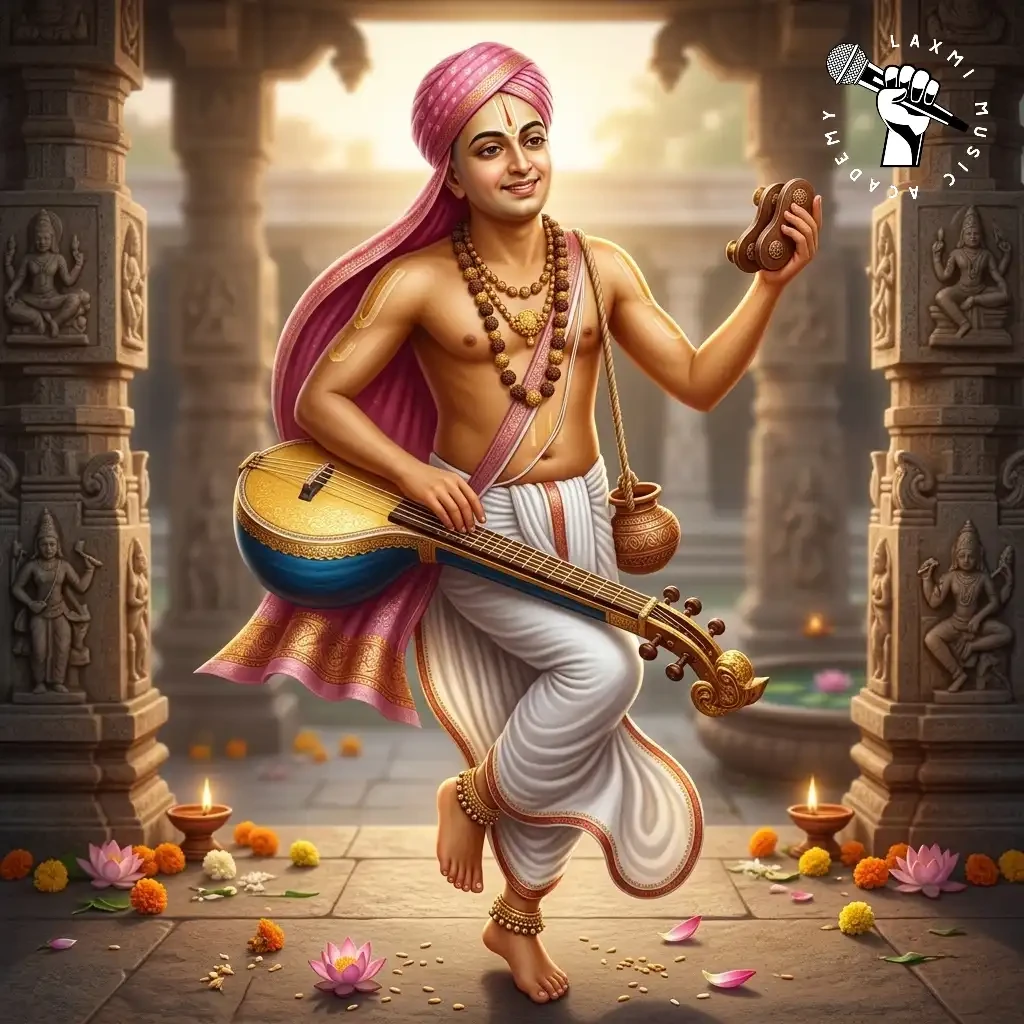
A katcheri, the live Carnatic concert where all the learning comes together on stage.
So you are heading to your first katcheri, a live Carnatic concert, and maybe you are quietly wondering what on earth is going on up there. Relax, my friend. Trust me, you do not need to be an expert to fall in love with it. A katcheri is one of the warmest, most welcoming rooms you can sit in, and here is your friendly map to what happens.
Whether you are going for your child, for the culture, or just out of curiosity, this one is for you. We got you.
What is a katcheri?
A katcheri is simply a Carnatic music concert. At the centre sits the main artist, either a singer or an instrumentalist, and around them a small team of musicians who lift the whole thing higher. There is no big light show and no fireworks. The magic here is all in the sound, and in the beautiful back and forth between the artists.
Who is on stage
The main artist leads, usually a vocalist. A violin sits alongside, shadowing and answering the melody. The mridangam, a two-sided drum, holds the rhythm. Humming quietly behind it all is the tanpura or a sruti box, the steady drone. Sometimes a ghatam, a clay pot, joins the rhythm team too.
The shape of a concert
A katcheri has a lovely, loose order to it, and once you know the shape, you can follow along like a pro. It usually starts light and warm, then goes deeper, then eases back down. Here is the flow:
- It often opens with a varnam, a bright warm-up piece that sets the energy.
- Then come a set of kritis, the songs at the heart of the tradition, growing richer as they go.
- For the big main piece, the artist explores a raga freely in an alapana, with no rhythm yet, just pure mood, before improvising with niraval and kalpana swaram.
- Then the drummer gets the spotlight for a solo, the tani avartanam. This part is a whole vibe, so watch the hands fly.
- To close, lighter and loved favourites, the thukkada, and a short mangalam to end on a blessing.
You do not have to understand every note to feel every note.

Did you know?
If you see people in the audience gently tapping the beat on their laps, or nodding and smiling in the middle of a song, that is not restlessness. They are keeping the tala and cheering a phrase that landed beautifully. It is completely normal, and you are very welcome to join in. That is half the fun.
How to enjoy it, even as a total beginner
Here is the cheat code: do not try to analyse it. You do not need to name the raga or count the beats. Just let the sound wash over you and see how it makes you feel. Watch the artists look at each other, trade little musical phrases, and grin when something clicks. That conversation between them is the real show.
Notice the drone humming underneath everything. Feel the rhythm settle into your chest. If your hand wants to tap along with the tala, let it. Little by little, without any effort, your ear starts to understand more each time. That is a big W, and it happens all on its own.
The gift this brings to your child
Nothing inspires a young learner like seeing the real thing, live. One good katcheri shows a child exactly where this whole journey leads: the stage, the joy, the artists who once sat right where they sit now. Many students come home from a concert lit up, singing, and more in love with their lessons than ever. It is the best kind of motivation, and it costs nothing but an evening of listening together.
🎧 Just show up with open ears
There is nothing to prepare and nothing to study before you go. You do not need to rehearse anything or read up on the pieces. Simply turn up, sit back, and enjoy.
If your child is curious, you might watch a short concert clip together beforehand, purely for fun. But that is entirely optional, never homework, and never something to push.
Come along with us
The best way to understand a katcheri is to sit in one, and the best way to belong in that room is to learn the music yourself. One day, it could be your child up on that stage, and trust me, there is no feeling like it. Come and learn with us, and we will help you get there, one note at a time. No shortcuts, no pressure, just steady progress.
Words to know
Katcheri, a live Carnatic music concert.
Alapana, the free, rhythm-less exploration of a raga that opens a main piece.
Niraval, improvising around a single line of a song while keeping its rhythm.
Kalpana Swaram, spontaneous patterns of swaras sung in the moment.
Tani Avartanam, the percussion solo, where the mridangam and friends take the spotlight.
Thukkada, the lighter, popular pieces near the end of a concert.
Mangalam, the short closing piece, a note of blessing to finish.
Your questions, answered
What is a katcheri?
A katcheri is a live Carnatic music concert. It usually features a main artist, either a singer or an instrumentalist, supported by a violinist, a mridangam player and a steady drone, performing a set of pieces that grow in depth as the concert unfolds.
How long does a Carnatic concert last?
A full katcheri often runs for two to three hours, though shorter concerts of an hour or so are common too. You are always free to arrive, settle in and simply enjoy at your own pace.
Do I need to know music to enjoy a katcheri?
Not at all. You do not need to understand every note to feel the music. Let it wash over you, watch the interplay between the artists, and enjoy the moments when the audience responds. Understanding grows naturally the more you listen.
What instruments are on stage at a Carnatic concert?
Typically the main artist sits in the centre, with a violin shadowing the melody, a mridangam keeping the rhythm, and a tanpura or sruti box humming the drone. Sometimes a ghatam or other percussion joins in as well.
Want your child to one day be on that stage?
It starts with a single first note, and we will be right beside them the whole way. Send us a message on WhatsApp, and we will help you or your child begin, online, or here with us in Puchong.
💬 WhatsApp Us
Master Bala
Master Bala carries the timeless tradition of Carnatic music to a new generation at Laxmi Music Academy in Puchong, teaching with patience and devotion, and guiding each student from their very first note all the way to the stage.