
Alankaram: Where Melody Meets Rhythm
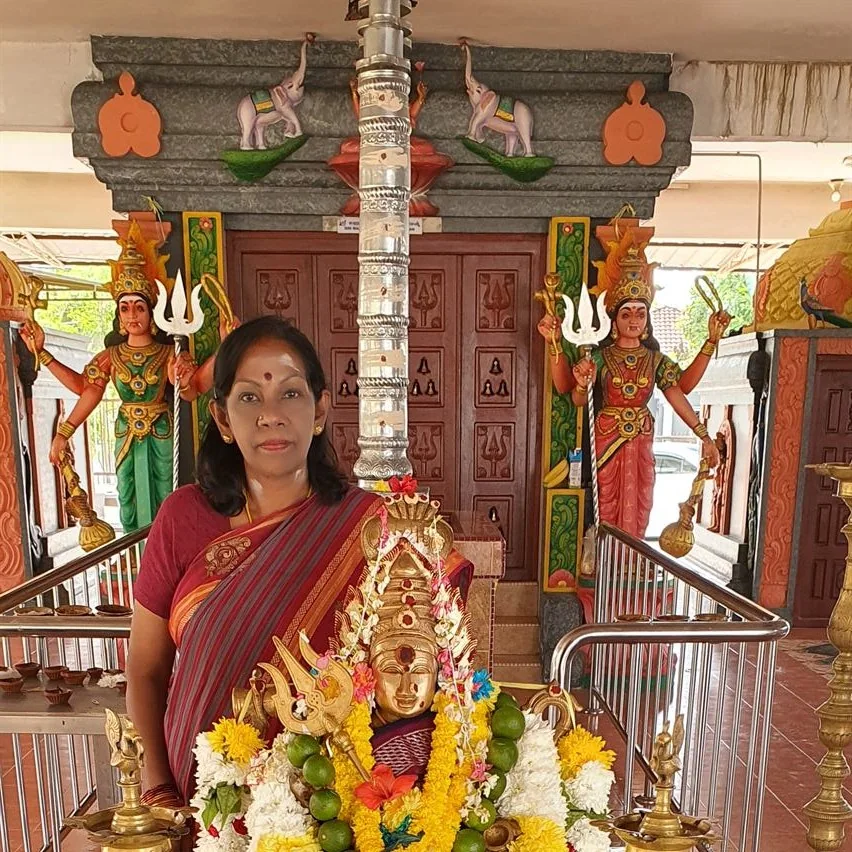 By Mataji Laxmi · 25 July 2026 · 5 min read

The stage where two rivers, melody and rhythm, finally meet.
My dear child, until now you have learned notes, and you have learned to move between them. But rhythm has stayed simple and steady in the background, like a patient friend waiting their turn. With Alankaram, that friend finally steps forward. This is where melody and rhythm meet properly, and the music becomes whole.
It is one of my favourite stages to teach, and let me tell you why.
What is Alankaram?
Alankaram takes swara patterns, much like those you already know, and sets them to the sapta talas, the seven fundamental rhythmic cycles of our tradition. Traditionally there is one alankaram for each tala, seven in all.
So the notes themselves are not the challenge here. The challenge, and the gift, is that each one lives inside a different rhythmic shape.
Why the seven talas matter so much
The sapta talas are the foundation of nearly every rhythm in Carnatic music. Almost any tala a student meets later is built from these same seven shapes. Learning them here means the rest of the journey has solid ground beneath it.
Where two rivers meet
Until Alankaram, a student holds melody in one hand and rhythm in the other, but rarely both at once with any real demand. Now they must sing the correct swara and keep the correct tala together, with the hand marking time while the voice carries the tune.
It feels like patting your head and rubbing your stomach at first. Then, gently, it stops feeling like two things and becomes one thing. That moment is quietly wonderful to witness.
Two rivers that ran separately finally meet, and become one.
Did you know?
Like the exercises before it, the Alankaram sequence traces back to Purandaradasa, who arranged these graded steps five centuries ago. When your child counts out a tala here, they are following a path he laid down long before any of us were born.
The last step before real songs
Alankaram is the final stage of pure exercise. After this comes Geetam, and Geetam is a song, with words and meaning and devotion in it. So Alankaram carries a certain sweetness, it is the threshold, the last preparation before a student sings something that is truly music rather than an exercise.
The gift this brings your child
The ability to hold two things at once with grace. Melody in the voice, rhythm in the hand, neither disturbing the other. It is a small kind of coordination, and it teaches a patience and presence that reaches far beyond music.
🎧 Simply come and sit with it
There is nothing to prepare at home. Alankaram must be learned with a teacher beside you, keeping the tala together, because rhythm learned alone tends to drift without anyone noticing.
If your child taps a rhythm at the table because it has got into them, that is a lovely sign. But it is always their own choosing, never something we ask for.
And then, at last, a song
When Alankaram sits comfortably, Geetam is waiting, and with it the first real song your child will ever sing in this tradition. Come to class, take this last gentle step with us, and let us walk them to that threshold together.
Words to know
Alankaram, exercises setting swara patterns to the seven basic talas.
Sapta Tala, the seven fundamental rhythmic cycles of Carnatic music.
Dhattu Varisai, the jumping-note exercises that come before Alankaram.
Geetam, the first proper song a student learns, which follows Alankaram.
Tala, the rhythmic cycle that keeps time in a piece of music.
Your questions, answered
What is Alankaram in Carnatic music?
Alankaram is a set of exercises that place swara patterns into the sapta talas, the seven fundamental rhythmic cycles. Traditionally there is one alankaram for each of the seven talas.
What are the sapta talas?
The sapta talas are the seven basic rhythmic cycles of Carnatic music. Nearly every tala a student encounters later is built from these same seven structures, which is why Alankaram introduces them early.
What comes after Alankaram?
Geetam comes next, which is the first proper song a student learns. Alankaram is the last stage of pure exercise before the repertoire of actual songs begins.
Why is Alankaram considered difficult?
Because it is the first stage that demands melody and rhythm together, with the voice carrying the tune while the hand keeps the tala. Coordinating both at once takes time, though it becomes natural with steady work in class.
Wish to reach the threshold of your first song?
Send us a message on WhatsApp, and we will lovingly help you or your child begin, online, or here with us in Puchong.
💬 WhatsApp Us
Mataji Laxmi
Mataji Laxmi is the founder and guiding guru of Laxmi Music Academy in Puchong. A lifelong devotee of Carnatic music, she has nurtured generations of students with warmth and devotion, keeping this beautiful tradition alive for the young.