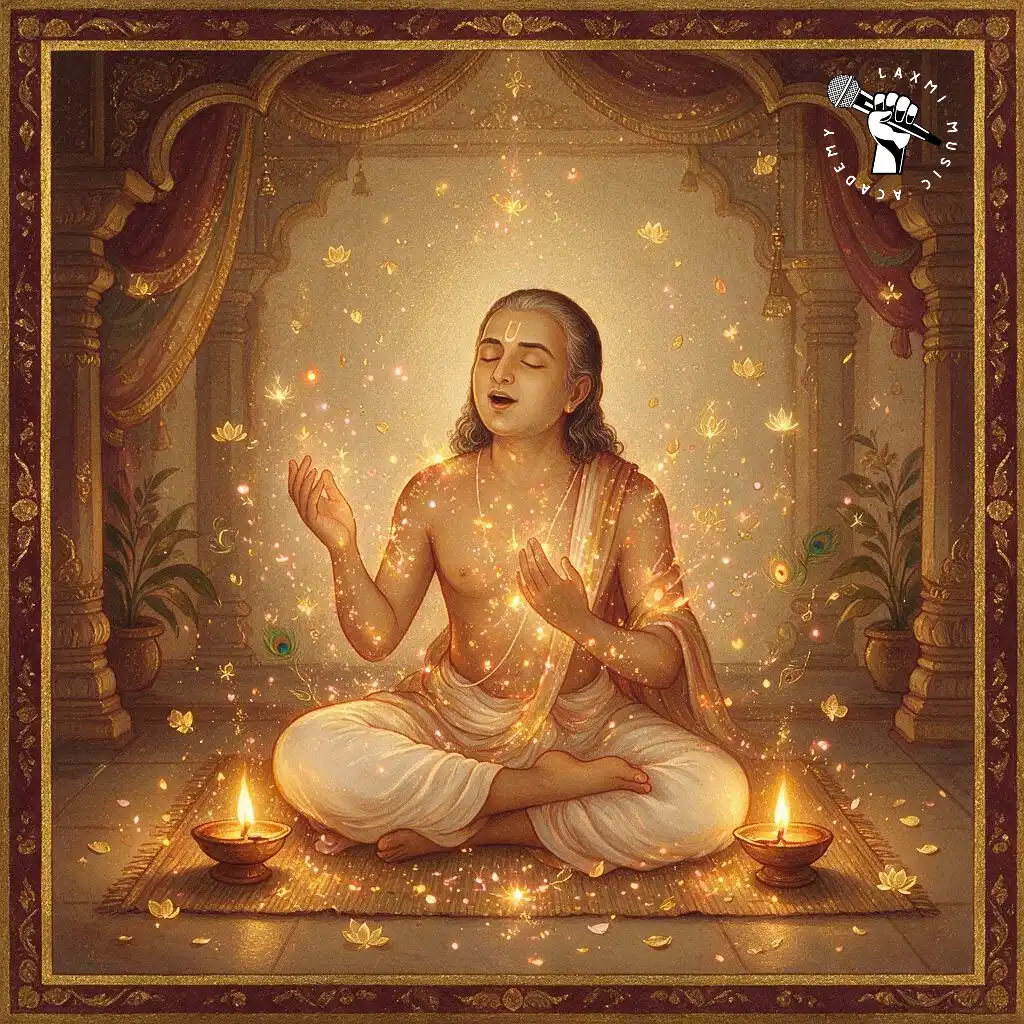
From Geetam to Varnam: What Comes After Sarali Varisai
 By Master Bala · 23 July 2026 · 5 min read
From simple exercises to your very first proper songs, one steady step at a time.
So your child has been doing Sarali Varisai for a while now, and you are probably wondering, what next? Good question, and trust me, there is a clear path here. It is not random at all. Every student walks through the same few stages, and each one builds directly on the last. Let me walk you through it.
No shortcuts, no skipping ahead, just a steady climb that actually works.
The order this usually goes in
After Sarali Varisai and the related early exercises, most students move through roughly this sequence: Geetam, then Swarajati, then Varnam, and finally the first proper kritis. Each stage adds one new layer, more melody, more rhythm, more expression, without ever throwing too much at once.
Think of it like building blocks
Sarali Varisai teaches the notes. Geetam adds melody and simple song structure. Swarajati adds more rhythm and swara patterns. Varnam pulls it all together into one serious piece. Each step only works because the one before it is solid.
What is a Geetam?
A Geetam is basically the first real "song" a student sings. It has a simple, catchy melody and a steady rhythm, and it feels like a big level up from the earlier exercises, because suddenly it actually sounds like music, not just practice drills. Popular first Geetams include ones like "Sri Gananatha," a classic starting point for generations of students.
The first time it sounds like a real song, that is when it clicks.

Swarajati, the bridge in between
Swarajati sits right in the middle, a bit more complex than Geetam, with richer swara patterns and a bit more rhythmic challenge, but still approachable. It is the stage where a student's ear and voice really start syncing up together. Not every student spends a long time here, but it plays an important bridging role toward Varnam.
Did you know?
Some well-known Swarajatis were composed by Syama Sastri himself, one of the Trinity. So even at this "in-between" stage, students are already brushing up against compositions by the legends.
Varnam, the big one
Here is the piece that really tests everything so far. A Varnam packs a huge amount into one composition, multiple speeds, intricate swara patterns, real rhythmic complexity, and serious expression. It is considered such a solid foundation piece that even professional musicians keep practising Varnams throughout their entire careers, not because they need to relearn it, but because it keeps their skills sharp.
Why Varnam matters so much
Once a student can sing a Varnam well, they genuinely have the tools to tackle almost any kriti after that. It is the single biggest confidence boost in the early-to-intermediate journey, the moment where things start to feel less like exercises and more like real music-making.
How long does this whole thing take?
Honestly, it depends. Some students move through this in several months, others take a couple of years, and both are completely normal. It depends on how often you attend class, how quickly each stage clicks, and honestly, everyone's pace is different. There is no race here, no comparison needed.
🎧 No pressure, this happens in class
You do not need to prep any of these stages at home. Every step, from Geetam through Varnam, is taught and built together with the teacher in class.
If your child wants to hum their Geetam at home sometimes because they enjoy it, great. But it is always optional, never something we ask for.
Trust the process
Every single student who has ever sung a Varnam or a kriti walked through Geetam and Swarajati first. There are no shortcuts here, and honestly, you would not want one. Each stage is doing real work, quietly building the skills the next one needs. Come learn with us, and we will guide your child through every step at exactly the right pace.
Words to know
Geetam, a simple, song-like piece, usually the first proper song a student learns.
Swarajati, a piece between Geetam and Varnam, with richer swara patterns and rhythm.
Varnam, a foundational, technically rich piece that even advanced musicians keep practising for life.
Kriti, a full devotional composition, usually learned after Varnam.
Your questions, answered
What comes after Sarali Varisai in Carnatic music?
After Sarali Varisai and the related early exercises, students typically move to Geetam, then Swarajati, and eventually Varnam, each adding a bit more melody, rhythm and expression before the first full songs, or kritis.
What is a Geetam?
A Geetam is a simple, song-like piece with an easy melody and steady rhythm. It is usually the first proper 'song' a student learns, bridging the gap between plain exercises and real Carnatic compositions.
What is a Varnam and why does it matter so much?
A Varnam is a more advanced piece that packs in a huge range of techniques, ragas, talas and swara patterns in one composition. It is considered a foundational piece that even advanced musicians continue to return to throughout their lives.
How long does it take to reach Varnam?
It varies by student, but most take anywhere from several months to a couple of years to comfortably reach Varnam, depending on how often they attend class and how quickly each stage clicks for them. There is no fixed timeline, and that is completely fine.
Ready to take the next step?
Send us a message on WhatsApp, and we will help you or your child begin, online, or here with us in Puchong.
💬 WhatsApp Us
Master Bala
Master Bala carries the timeless tradition of Carnatic music to a new generation at Laxmi Music Academy in Puchong, teaching with patience and devotion, and guiding each student from their very first note all the way to the stage.