
7 Real Benefits of Learning Carnatic Music
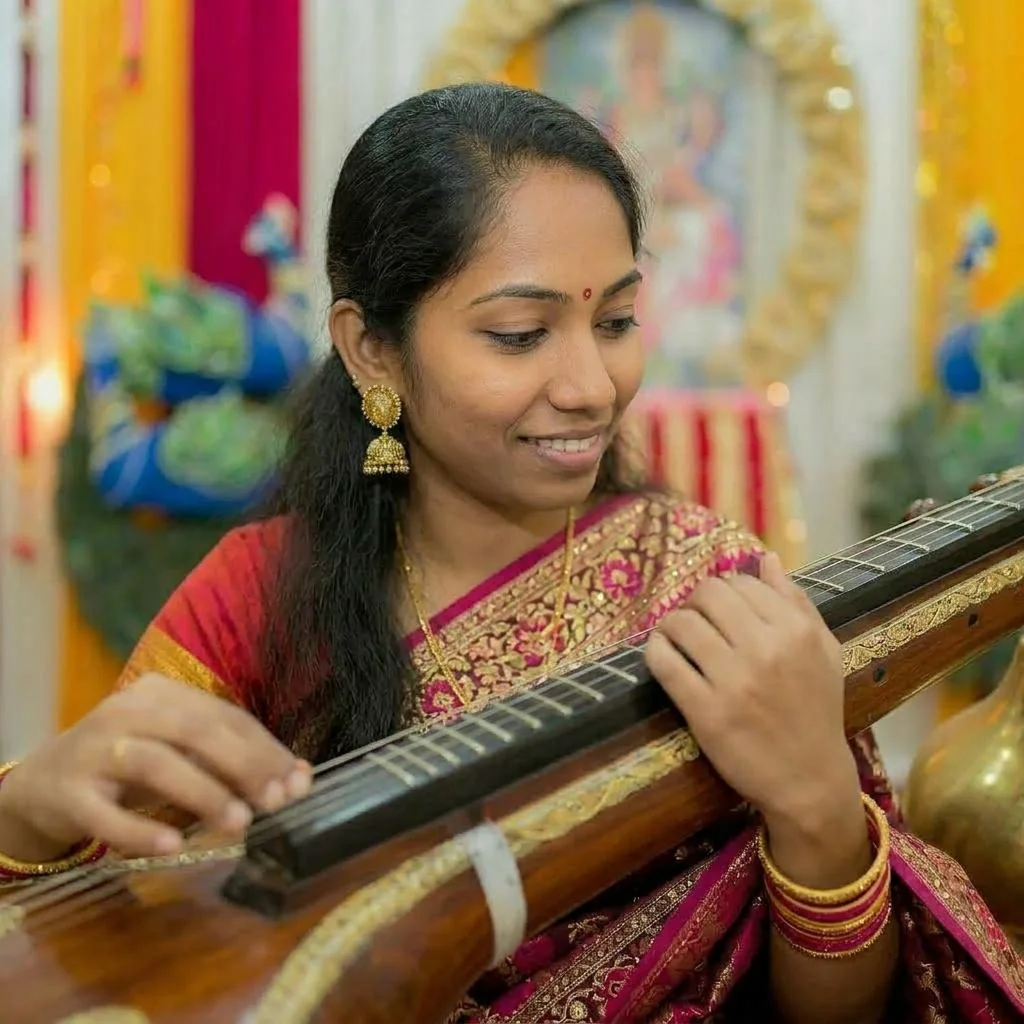 By Teacher Nanthini · 17 July 2026 · 5 min read

Music is the one gift that stays with you for a lifetime.
Okay real talk, whether it is a five year old or a fifty year old walking in for their first class, most people are thinking purely about the music. Fair enough, that is literally the point. But here is the thing nobody tells you upfront: Carnatic music quietly builds so much more than a good singing voice. It is honestly one of the most well-rounded things a person can pick up, at any age, and I want to walk you through why.
These are not made-up claims. They are things we watch happen, term after term, right in front of us, in students of every age.
1. It trains real focus
Following a raga, holding a sruti, staying with a tala all at once takes serious concentration. There is no auto-pilot here. Week after week, whether you are a child or an adult, you are quietly building the skill of paying attention fully to one thing, and that skill does not stay in the classroom. It shows up at work, at school, at home, everywhere.
Two things happening at once
First, the ear is training itself to catch tiny details in pitch and rhythm. Second, the mind is learning to hold several things steady together: the note, the beat, the words. That is a serious mental workout, dressed up as a song.
2. It builds memory and confidence, together
Carnatic music leans a lot on memory, songs, swara patterns, whole compositions, learnt by ear and repetition. That is a genuine memory workout, no flashcards needed. And here is the glow-up nobody talks about enough: the day you sing a full piece from memory, on your own, something shifts in how you see yourself. That is real, earned confidence, and it hits the same whether you are seven or seventy.
Confidence built through music tends to show up everywhere else too.
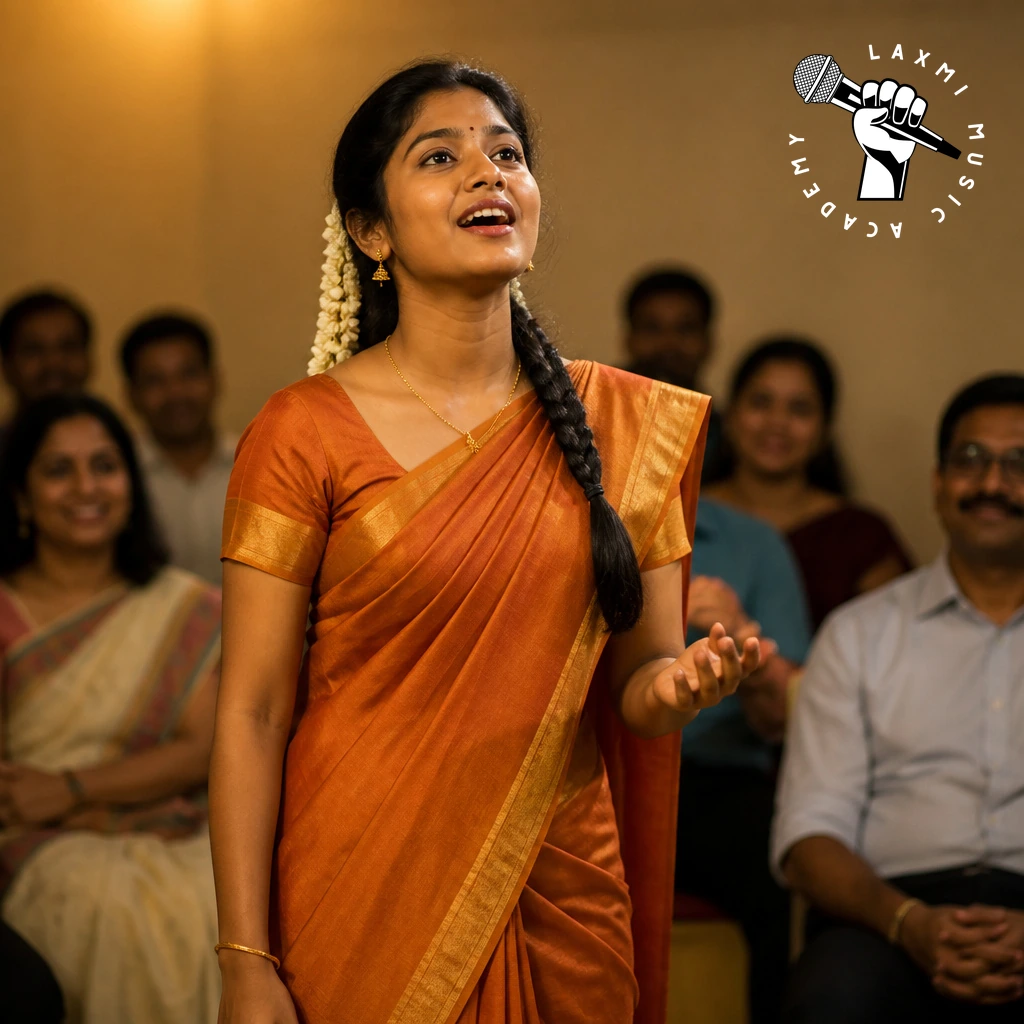
Did you know?
Many of our quietest, shyest students are the ones who open up the most once they start performing small pieces in class. Singing in front of others, even a small friendly room, is a gentle, low-pressure way to get used to being seen. It carries over into everyday confidence too.
3. Discipline that does not feel like a chore
Showing up every week, sitting with a teacher, following a structure, that is discipline, quietly built in. But here is the important part: it is discipline through joy, not pressure. For our younger students, nobody is drilling them at home. For adults, there is no guilt trip either. It is simply the natural result of coming back, week after week, to something you enjoy.
The bonus most students notice
Better listening. Genuinely. Carnatic training sharpens the ear so much that many students start noticing details in all kinds of sound, conversations, other music, even instructions at school or work. It is a skill that quietly levels up everything else.
4. A living connection to culture
This is not just any music, it carries centuries of devotion, poetry and history inside it. Every song you learn connects you to that whole lineage, whether you realise it in the moment or not. That is a pretty special thing to carry, at any age, and it never goes out of style.
🎧 No pressure, just show up
None of this needs any work at home. There is nothing to rehearse, nothing to drill, nothing riding on it, for children or adults alike. All of it grows naturally just from coming to class and singing together.
If you or your child want to hum a tune around the house sometimes, wonderful. But it is always your choice, never something we ask for.
Come see it for yourself
Honestly, the best way to understand these benefits is to watch them show up in yourself or your child. Come sit in on a class, meet the teachers, and see how naturally all of this unfolds. No pressure, no big commitment, just an open door, whatever your age.
Words to know
Raga, the melodic framework a Carnatic song is built around.
Sruti, the base pitch a singer tunes their voice to.
Tala, the rhythmic cycle that keeps time in a song.
Swara, a single musical note, one of the seven building blocks of a song.
Your questions, answered
What are the benefits of learning Carnatic music?
Learning Carnatic music builds focus, memory, discipline, confidence and emotional expression, while also connecting you to a rich cultural and spiritual heritage. The benefits go far beyond singing itself, and apply just as much to adults as to children.
Is Carnatic music only for children, or can adults learn too?
Anyone can learn, at any age. Many of our students are adults who always wanted to learn but never had the chance growing up. Curiosity and a willingness to sit and listen matter far more than age.
Does learning Carnatic music help with focus and memory in daily life?
Many students, young and old, notice improvements in focus, memory and listening skills that carry over into school, work and everyday life. Carnatic music trains sustained attention and pattern recognition, both useful well beyond music.
Is Carnatic music only about religion or performance?
Not at all. While the tradition has deep spiritual roots, learning it today is just as much about confidence, discipline and joy. Many students learn simply for the love of singing, with no pressure to perform.
Ready to see the benefits for yourself?
Send us a message on WhatsApp, and we will help you or your child begin, online, or here with us in Puchong.
💬 WhatsApp Us
Teacher Nanthini
Teacher Nanthini teaches veena and Carnatic vocal at Laxmi Music Academy in Puchong. With a warm, encouraging style, she loves guiding beginners through their very first notes, turning nervous starts into real, joyful music.