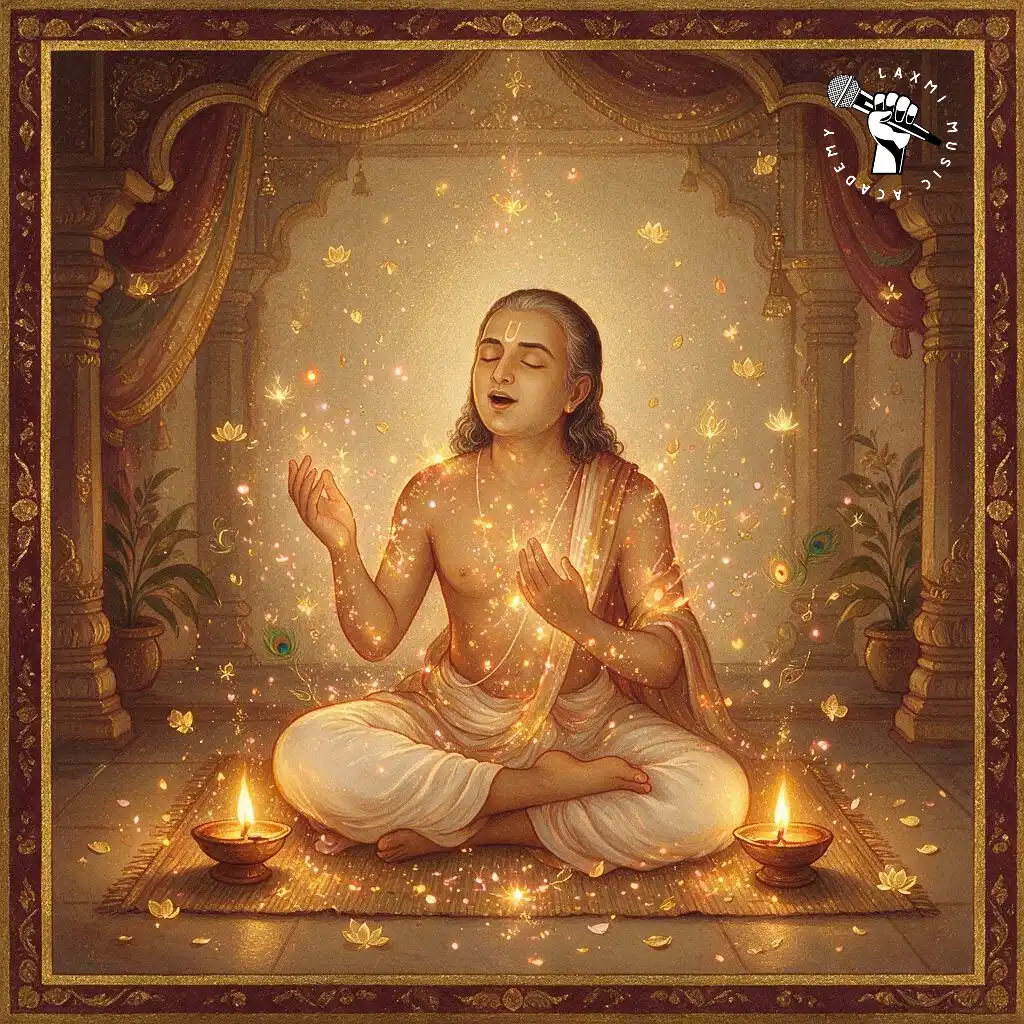
Meet the Trinity: Tyagaraja, Dikshitar & Syama Sastri
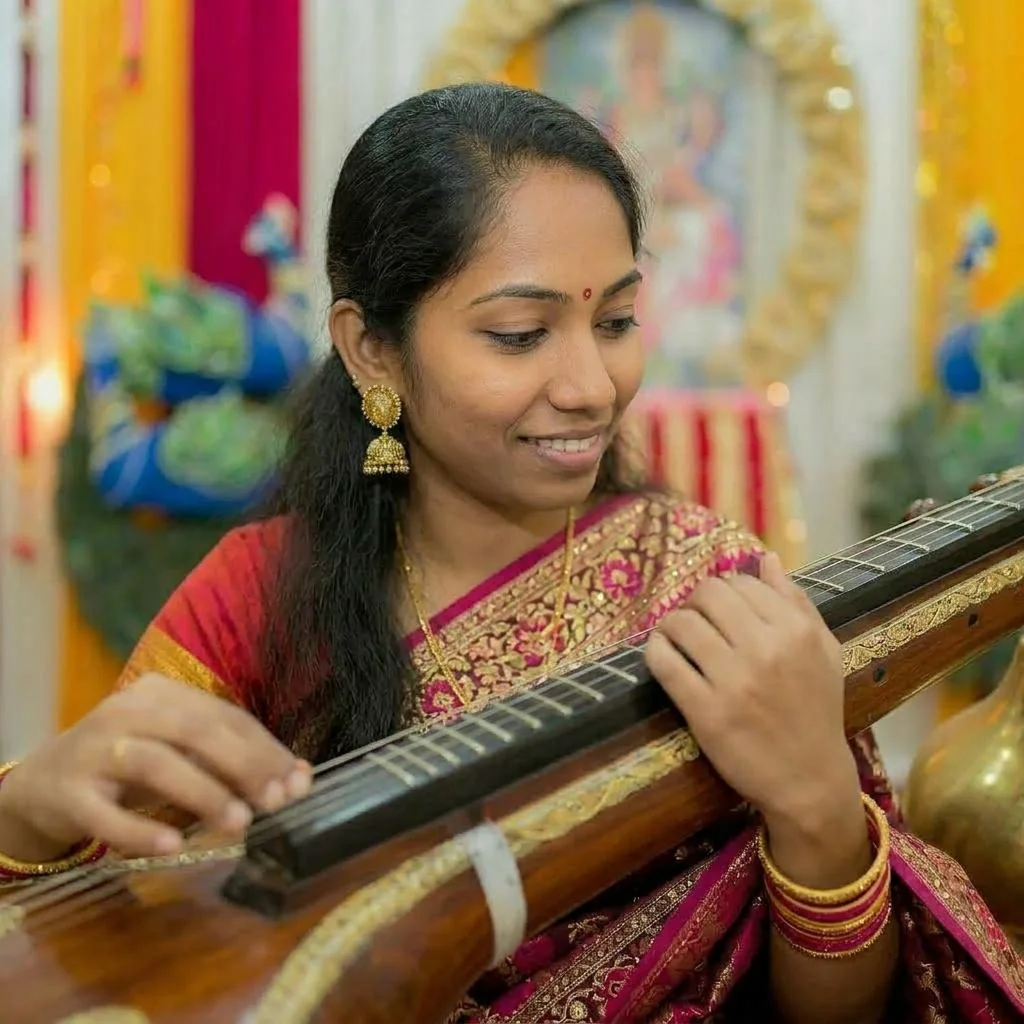 By Teacher Nanthini · 23 July 2026 · 6 min read
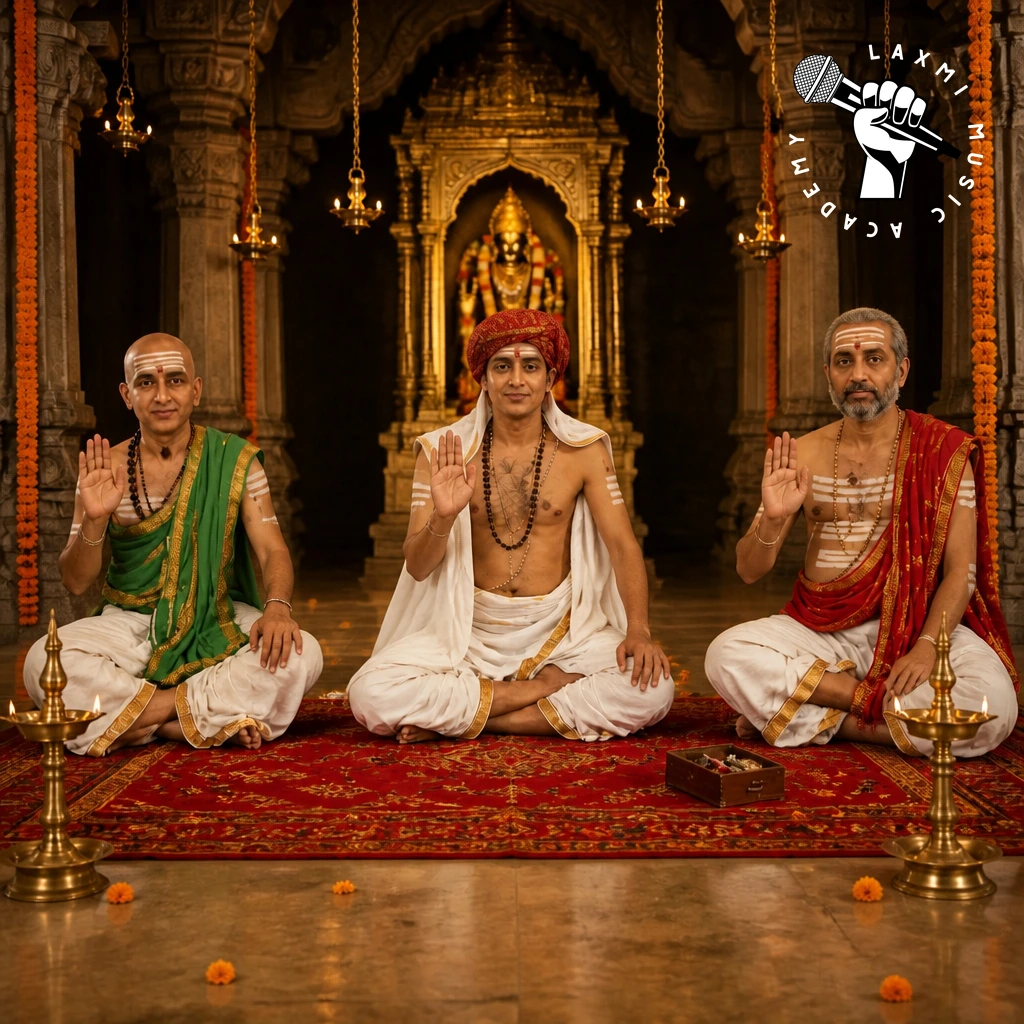
Three composers, one golden age, songs still sung in every class today.
Okay, if you have been learning Carnatic music for a bit, you have probably already heard these three names thrown around a lot: Tyagaraja, Dikshitar, Syama Sastri. Together they are called the Trinity, and honestly, once you know their vibe, so much of what you sing starts making a lot more sense. Let me introduce you properly.
These three lived around the same time, the eighteenth century, in more or less the same part of South India, and between them they basically shaped the Carnatic music we still learn today.
So who actually are they?
The Trinity is just a nickname for three legendary composers whose songs form the backbone of the Carnatic repertoire. Almost every student, at some point, ends up learning a kriti by at least one of them, often all three. They did not know they would become "the Trinity" one day, they were just three geniuses composing devotional music, around the same era, who each brought something completely different to the table.
The quick vibe check
Tyagaraja: pure heart, deep devotion, incredibly melodic. Dikshitar: grand, stately, almost meditative. Syama Sastri: tender, rhythmically intricate, a little rare and special. Same era, three completely different energies.
Tyagaraja, the heart of it all
If you have sung more than a handful of kritis, chances are one of them was his. Tyagaraja composed thousands of songs, pouring his devotion into every line, and his melodies just hit different, emotional, direct, easy to fall in love with. His most famous set, the Pancharatna Kritis, five gem-like compositions, are still performed together at his memorial every single year, with musicians from all over the world showing up. That is a serious legacy.
Centuries later, his songs still feel like they were written yesterday.
Muthuswami Dikshitar, grand and unhurried
Dikshitar's style is a whole different mood. His compositions are slower, weightier, almost like walking through a huge temple hallway rather than rushing through it. His lyrics blend deep devotion with references to temples and Sanskrit poetry, and honestly his songs reward patience. They are not built for a quick listen, they are built to sit with.
Did you know?
Dikshitar travelled widely across India and even composed songs that reference places he visited, almost like devotional travel notes set to music. Some of his compositions carry subtle Western musical influence too, picked up from his travels, which was pretty ahead of its time.
Syama Sastri, the rare gem
Syama Sastri composed fewer songs than the other two, but what he left behind is genuinely special. His compositions often carry intricate, unusual rhythmic patterns, and a tenderness that feels personal, almost like a quiet prayer. Because there are fewer of his kritis, learning one always feels a bit like discovering something rare.
Why this matters for your learning
Once you can recognise which composer wrote a song just from its feel, you are not just memorising music anymore, you are actually understanding it. That is a genuine level up, and it makes every new kriti you learn easier to connect with.
Why the Trinity matters to Sangeetham
Here is the real reason we keep coming back to these three names. Almost every Carnatic student, anywhere in the world, ends up singing their songs at some point. They are not optional footnotes in the history books, they are the actual backbone of what gets taught in classes like ours, generation after generation. Between them, they took a rich but scattered devotional tradition and shaped it into the structured, soulful art form we now call Carnatic music.
- Tyagaraja, thousands of devotional kritis and the famous Pancharatna Kritis, the emotional heart of the tradition, still performed together every year.
- Muthuswami Dikshitar, grand, temple-themed compositions that blend Sanskrit poetry with a touch of the places he travelled, some carrying early Western musical influence.
- Syama Sastri, fewer songs but rare rhythmic craftsmanship, tender compositions devoted to the Goddess, treasured precisely because there are so few of them.
Put simply, without these three, the Carnatic music you hear and learn today would sound, and feel, completely different.
You do not need to learn all three on day one
Here is the good news: nobody expects you to jump into Trinity compositions right away. These songs come later in the journey, once Sarali Varisai, Geetam and the early exercises feel comfortable. Right now, just enjoy knowing the names and the vibe of each composer. The songs themselves will come naturally, at the right pace, in class.
🎧 Just listen for fun, no pressure
There is nothing to study or prepare at home. Learning about the Trinity happens naturally through the songs you pick up in class over time.
If you are curious, you could listen to one short Tyagaraja kriti together at home sometime, just for the joy of it. Totally optional, never homework.
Come meet them properly
Reading about the Trinity is one thing, singing their songs is a whole different experience. Come learn with us, and one day you will find yourself humming a Tyagaraja kriti without even trying. That is when you know it has really landed.
Words to know
Trinity, the three legendary 18th century composers, Tyagaraja, Muthuswami Dikshitar and Syama Sastri.
Kriti, a devotional composition, the main song form these composers are known for.
Pancharatna Kritis, Tyagaraja's five famous "gem" compositions, still performed together every year.
Your questions, answered
Who are the Carnatic Trinity?
The Carnatic Trinity refers to three great 18th century composers, Tyagaraja, Muthuswami Dikshitar and Syama Sastri, whose compositions form the very heart of the Carnatic repertoire sung today.
Why is Tyagaraja so famous?
Tyagaraja composed thousands of devotional songs known for their emotional depth and melodic beauty. His compositions, including the famous Pancharatna Kritis, remain some of the most performed pieces in Carnatic music today.
What makes Muthuswami Dikshitar different from the other two composers?
Dikshitar is known for grand, stately compositions often set in slower tempos, with lyrics that blend deep devotion with references to temples and Sanskrit poetry. His style feels more meditative compared to the other two.
Does a beginner need to learn all three composers right away?
No. Beginners usually start with simpler exercises like Sarali Varisai before working toward the Trinity's compositions. Their songs come later in the journey, once the basics of swara and rhythm feel comfortable.
Ready to start your own journey toward these legends?
Send us a message on WhatsApp, and we will help you or your child begin, online, or here with us in Puchong.
💬 WhatsApp Us
Teacher Nanthini
Teacher Nanthini teaches veena and Carnatic vocal at Laxmi Music Academy in Puchong. With a warm, encouraging style, she loves guiding beginners through their very first notes, turning nervous starts into real, joyful music.