The History of Carnatic Music: A Living Tradition
 By Mataji Laxmi · 17 July 2026 · 6 min read
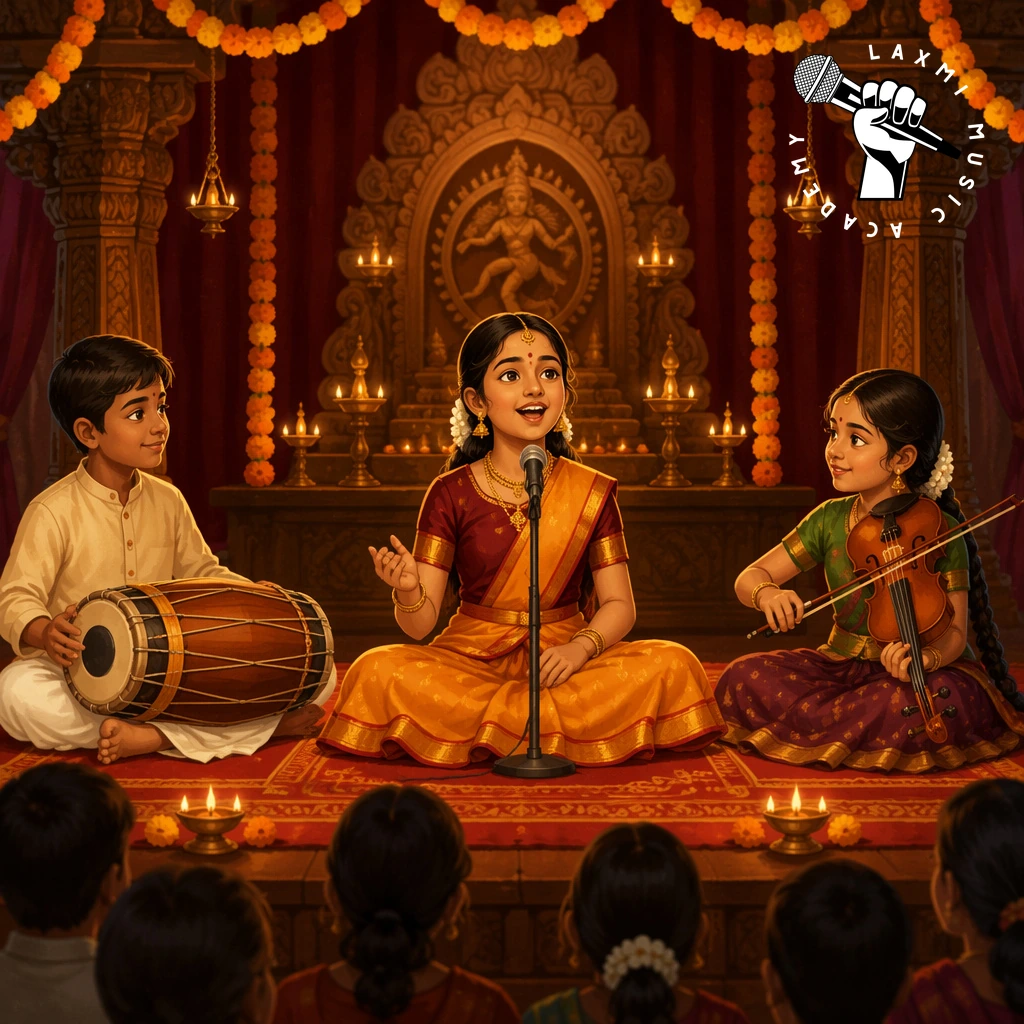
Carnatic music, carried gently from one generation to the next, still living in every voice that sings it.
My dear child, before we sing a single note, it is worth pausing to ask where this music came from. Carnatic music did not appear all at once. It grew slowly, over many centuries, carried gently from teacher to student, temple to temple, heart to heart, until it reached us, here, today. Let me tell you a little of that story.
It is a story worth knowing, because when you understand where a tradition comes from, you carry it a little differently.
Ancient roots
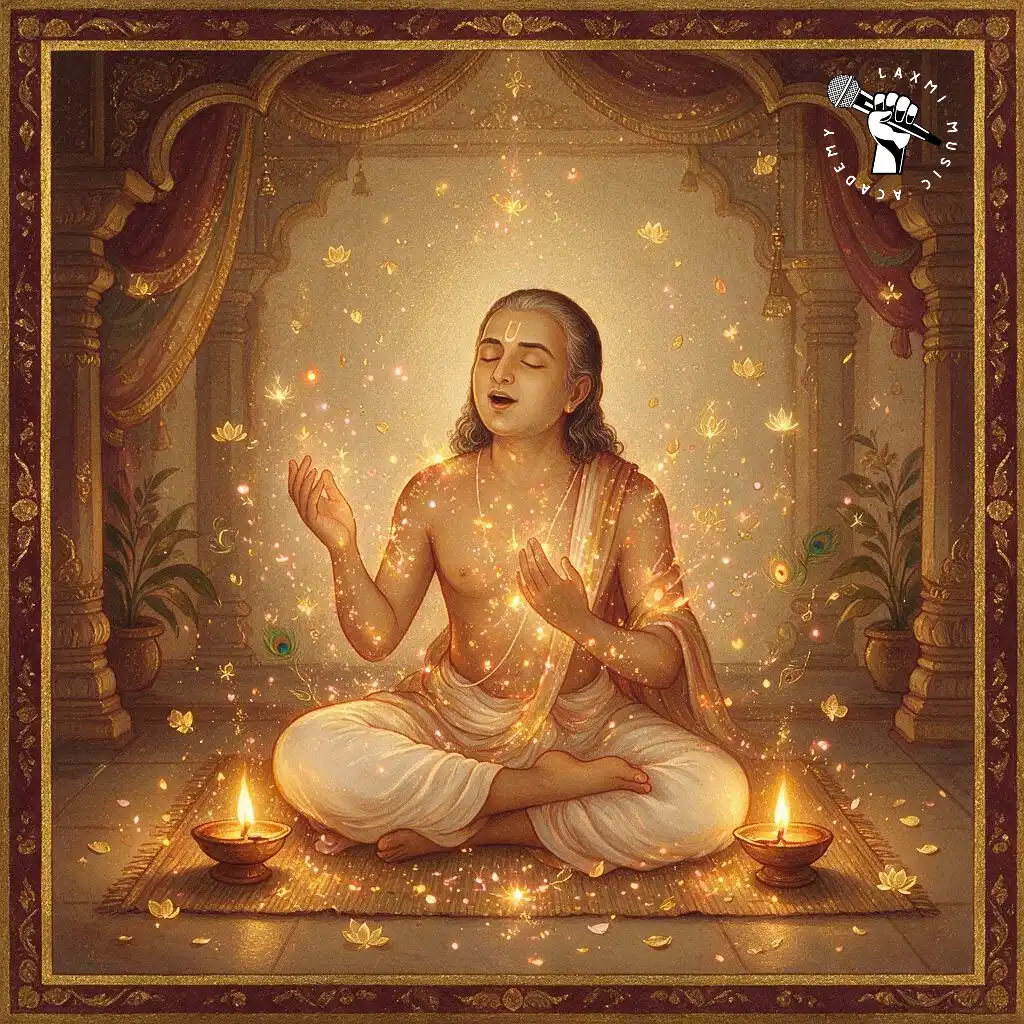
The earliest seeds of this music reach back thousands of years, to ancient Indian texts that first spoke of sound, scale and rhythm as sacred things. Temples became its first true home, music offered not for applause, but as worship, a way of reaching the divine through sound. Long before it was written down, it was sung, remembered, and passed on by voice alone.
Two gentle truths about its beginnings
First, this music was born from devotion, not performance. Its earliest purpose was prayer.
Second, it survived for centuries without being written down at all, carried purely through the living bond between teacher and student.
The father of Carnatic music
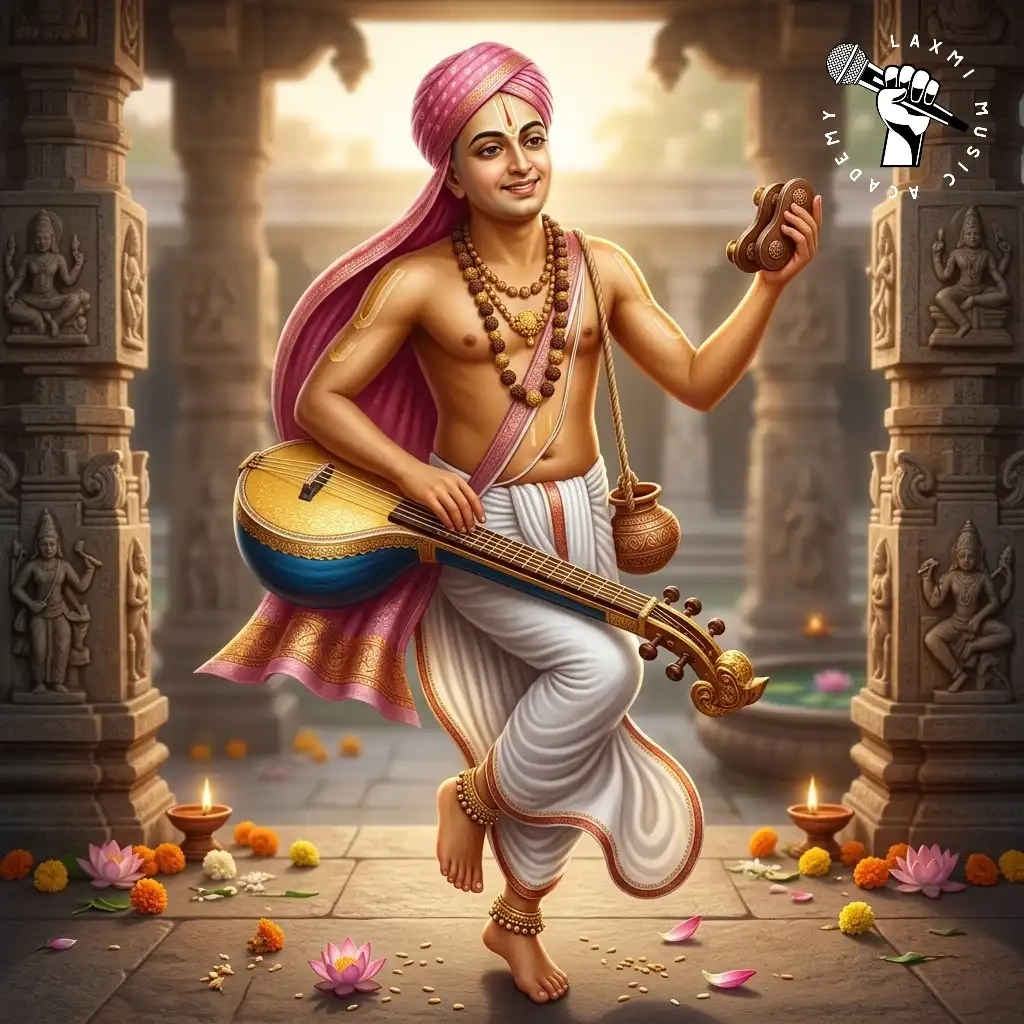
Around the fifteenth and sixteenth centuries, a saint-composer named Purandaradasa gave this tradition something it desperately needed: a clear, gentle way to begin. He organised the very method still used to teach a first student today, the Sarali Varisai and the exercises that follow it. For this reason, he is lovingly called the father of Carnatic music. Every single student who starts their journey with us is, in a quiet way, starting exactly where he once began.
Every beginner today still walks the path that Purandaradasa first laid down.
The Trinity, a golden age
Then came the eighteenth century, a true golden age. Three composers, now known together as the Trinity, Tyagaraja, Muthuswami Dikshitar and Syama Sastri, poured out compositions of such depth and beauty that they remain, to this day, the very heart of what we sing. Each had his own voice: Tyagaraja's devotion, Dikshitar's grandeur, Syama Sastri's tenderness. Together, they shaped the tradition into the form we now know and love.
Did you know?
Tyagaraja is said to have composed thousands of songs in his lifetime, many of which are still sung in concerts and classrooms across the world today, centuries later. A single life, and the echo of it has not faded even now.
Still alive, still growing
Here is what moves me most, my dear child. This is not a music frozen in the past. It is alive, carried forward in every classroom, every small concert, every child who learns their first swara today. Each generation of teachers and students adds a little of themselves to it, while still honouring everything that came before. That is not decay, that is life.
What this means for your child
When your child learns a single kriti, they are not merely memorising a song. They are joining a lineage that stretches back centuries, standing where saints and sages once stood, adding their own small voice to something ancient and living. That is no small gift to give a child.
🎧 Simply listen and wonder
There is nothing to study or memorise at home. All of this history is felt, gently, through the songs themselves, taught and sung together in class.
If you wish, you might one day tell your child that the song they hum was once sung by a saint, centuries ago. Just as a small, lovely thought, nothing more, and never a task.
Come be part of the story
This tradition has survived so long because someone, in every generation, chose to carry it forward. Come and let your child become part of that same living story with us, one note, one lesson, one small link in a very long and beautiful chain.
Words to know
Trinity, the three great eighteenth century composers, Tyagaraja, Muthuswami Dikshitar and Syama Sastri.
Kriti, a devotional composition, one of the central song forms of Carnatic music.
Purandaradasa, the fifteenth to sixteenth century saint-composer honoured as the father of Carnatic music.
Sarali Varisai, the foundational exercises every student begins their journey with.
Your questions, answered
How old is Carnatic music?
Its roots stretch back many centuries, drawing from ancient Indian musical texts and temple traditions. The form we sing today was shaped over hundreds of years, reaching a golden age around the 18th century.
Who are the Trinity of Carnatic music?
The Trinity refers to three great 18th century composers, Tyagaraja, Muthuswami Dikshitar and Syama Sastri, whose compositions form the very heart of the Carnatic repertoire sung today.
Who is considered the father of Carnatic music?
Purandaradasa, who lived in the 15th and 16th centuries, is widely honoured as the father of Carnatic music. He organised the foundational teaching method still used to begin every student's journey today.
Is Carnatic music still evolving today?
Yes. While its core remains rooted in tradition, Carnatic music is a living art, carried forward and gently reshaped by each generation of teachers and students who learn and perform it.
Wish to become part of this story?
Send us a message on WhatsApp, and we will lovingly help you or your child begin, online, or here with us in Puchong.
💬 WhatsApp Us
Mataji Laxmi
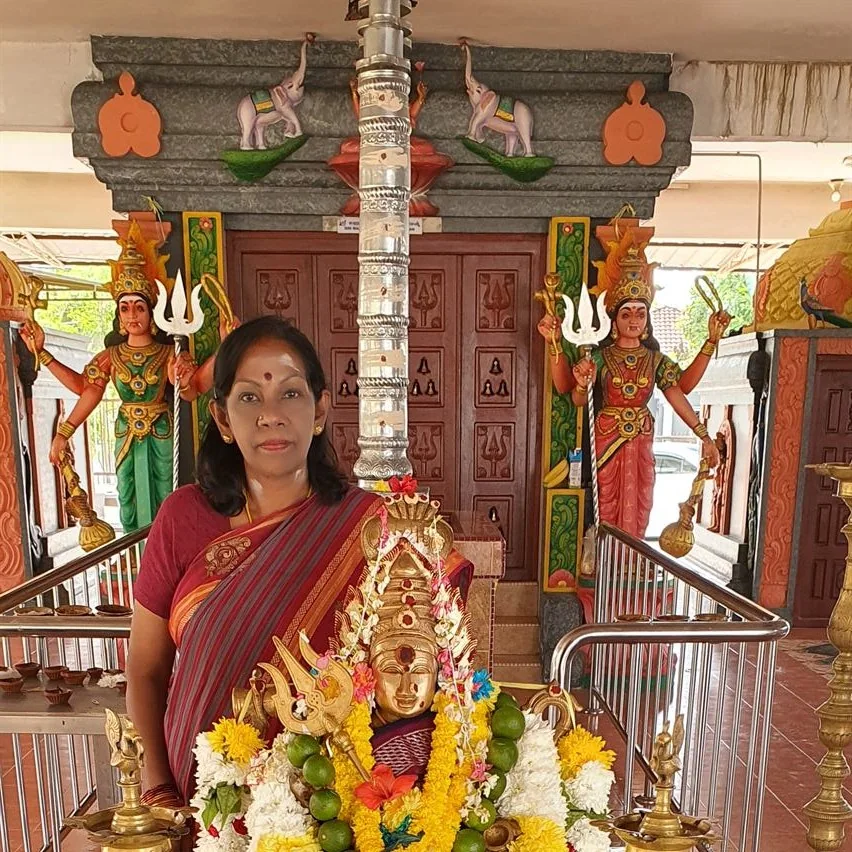
Mataji Laxmi is the founder and guiding guru of Laxmi Music Academy in Puchong. A lifelong devotee of Carnatic music, she has nurtured generations of students with warmth and devotion, keeping this beautiful tradition alive for the young.