
The Instruments of Carnatic Music: Veena, Mridangam & Violin
 By Mataji Laxmi · 23 July 2026 · 6 min read
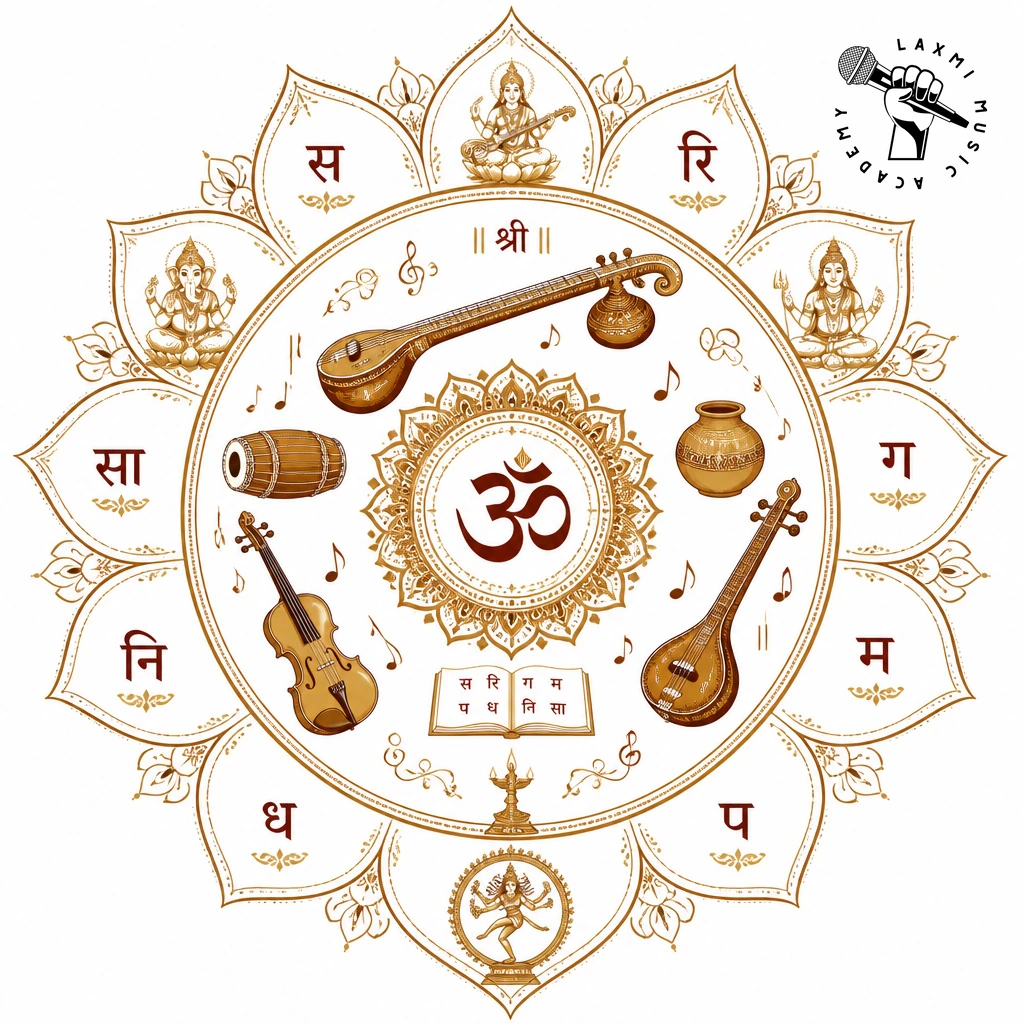
Each instrument carries its own voice, and together they hold up the song.
My dear child, close your eyes at a Carnatic concert and listen carefully. Beneath the singer's voice, you will hear other voices too, a deep resonant hum, a steady heartbeat of rhythm, a gentle shadow following the melody. These are the instruments of our tradition, and today I would like to introduce you to three of the most beloved: the veena, the mridangam and the violin.
Each one carries its own spirit, and together, they hold up the song like pillars hold up a temple.
The veena, the voice of Saraswati
The veena is one of the oldest instruments in all of Indian classical music, and it holds a very special place in our hearts. It is closely associated with Goddess Saraswati, the deity of music, wisdom and learning, who is often depicted holding one herself. The veena's tone is deep and resonant, and it is said to come closest of all instruments to mirroring the human voice, gliding smoothly between notes the way our own gamakas do.
A quiet truth about the veena
To play the veena well is to learn patience. Its strings do not forgive haste, they reward slow, careful listening. Many say that learning veena teaches you to listen to yourself before anything else.
The mridangam, the heartbeat
If the voice is the soul of a Carnatic performance, the mridangam is its heartbeat. This two-sided drum keeps the tala steady through the entire piece, holding everything together so the singer and other musicians always have solid ground beneath them. And when the moment comes for the tani avartanam, the percussion solo, the mridangam finally steps forward and shows the room exactly what it is capable of.
A steady heartbeat is felt long before it is noticed.
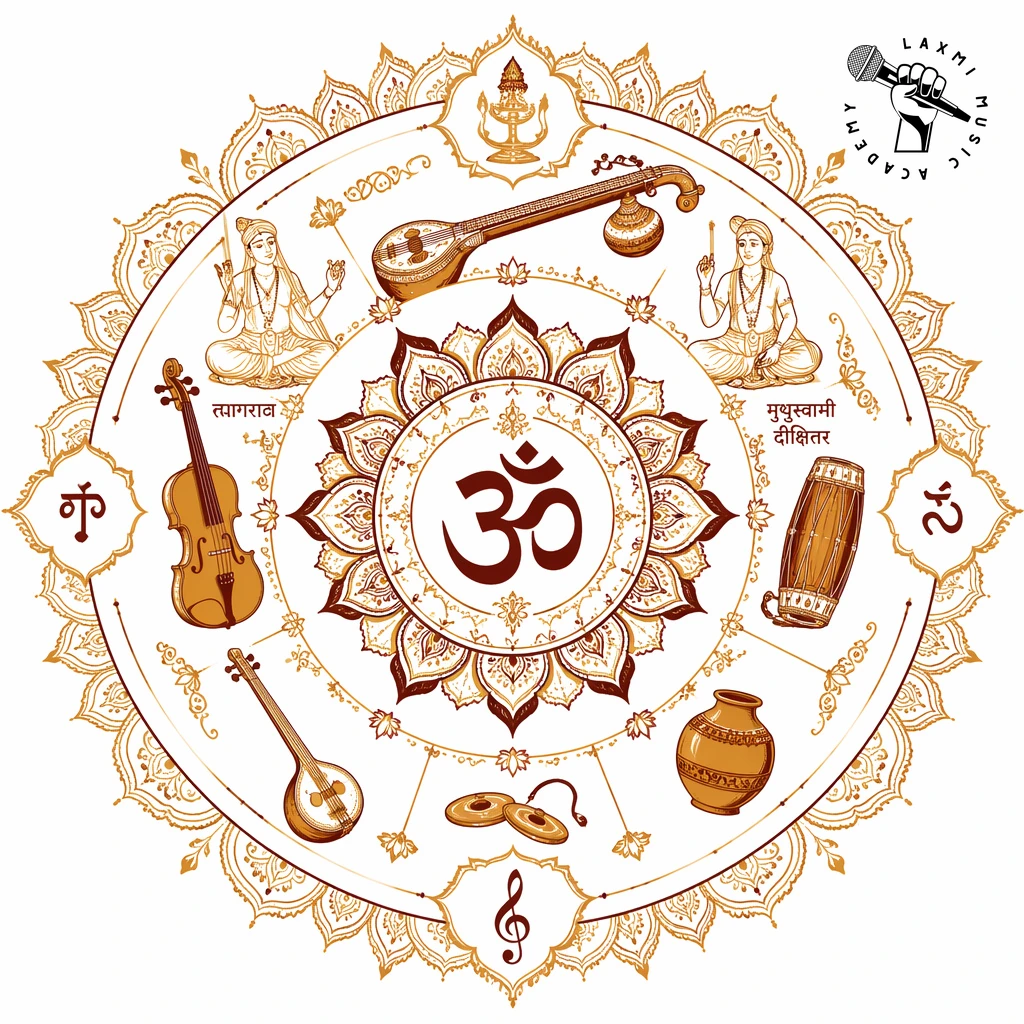
Did you know?
The mridangam's two sides are tuned differently, one for deep bass tones, one for higher, sharper sounds, and a skilled player can coax an entire world of rhythm from just these two heads. It takes years of devoted training to master.
The violin, an adopted voice that fits perfectly
Here is something that may surprise you, my dear child. The violin was not originally part of our tradition at all. It was adopted from Western music roughly two centuries ago, yet it found such a natural home in Carnatic music that today it feels as though it always belonged. Its ability to slide smoothly between notes made it perfectly suited for expressing gamaka, and now no concert feels complete without it gently shadowing the singer's every phrase.
What learning any instrument teaches
Whether it is veena, mridangam or violin, learning an instrument alongside singing deepens a student's understanding of the whole tradition. It teaches patience, careful listening and a quiet respect for how every part supports the whole. It is a gift that stays with you long after the lesson ends.
Yet the voice remains first among equals
Even with all these beautiful instruments, in our tradition, the human voice is still considered the truest instrument of all. Every instrument, in its own way, tries to imitate the warmth and flexibility of the voice. So even if your child begins with singing alone, know that they are already learning the very foundation every other instrument is built upon.
🎧 Simply listen together
There is nothing to study or memorise at home. Simply listening to a recording together, and noticing the different instruments weaving in and out, is enough.
If you wish, try picking out the mridangam's beat with your child sometime, purely for the joy of it. Entirely optional, never a task.
Come and listen closely
Words can only carry you so far when it comes to instruments like these. They must be heard, felt, sat beside. Come to class, and let these voices, the veena, the mridangam, the violin, and your own, become part of one shared song.
Words to know
Veena, an ancient stringed instrument closely associated with Goddess Saraswati.
Mridangam, the primary percussion drum, keeping the tala steady through a performance.
Violin, a Western instrument adopted into Carnatic music for its expressive, voice-like quality.
Tani Avartanam, the percussion solo where the mridangam takes centre stage.
Your questions, answered
What are the main instruments used in Carnatic music?
The most central instruments in Carnatic music are the veena, the mridangam and the violin, alongside the voice itself, which is considered the primary instrument in this tradition.
Why is the veena considered such a special instrument?
The veena is one of the oldest instruments in Indian classical music and is closely associated with Goddess Saraswati, the deity of music and knowledge. Its deep, resonant tone is thought to closely mirror the human voice.
What role does the mridangam play in a performance?
The mridangam is the primary percussion instrument in Carnatic music, keeping the tala, or rhythmic cycle, steady throughout a performance. It also has its own moment to shine during the tani avartanam, a percussion solo.
Is the violin originally a Carnatic instrument?
No, the violin was adopted from Western music around two centuries ago, but it was so beautifully suited to Carnatic music, especially gamaka, that it became a beloved and essential part of the tradition.
Wish to explore these instruments yourself?
Send us a message on WhatsApp, and we will lovingly help you or your child begin, online, or here with us in Puchong.
💬 WhatsApp Us
Mataji Laxmi
Mataji Laxmi is the founder and guiding guru of Laxmi Music Academy in Puchong. A lifelong devotee of Carnatic music, she has nurtured generations of students with warmth and devotion, keeping this beautiful tradition alive for the young.

