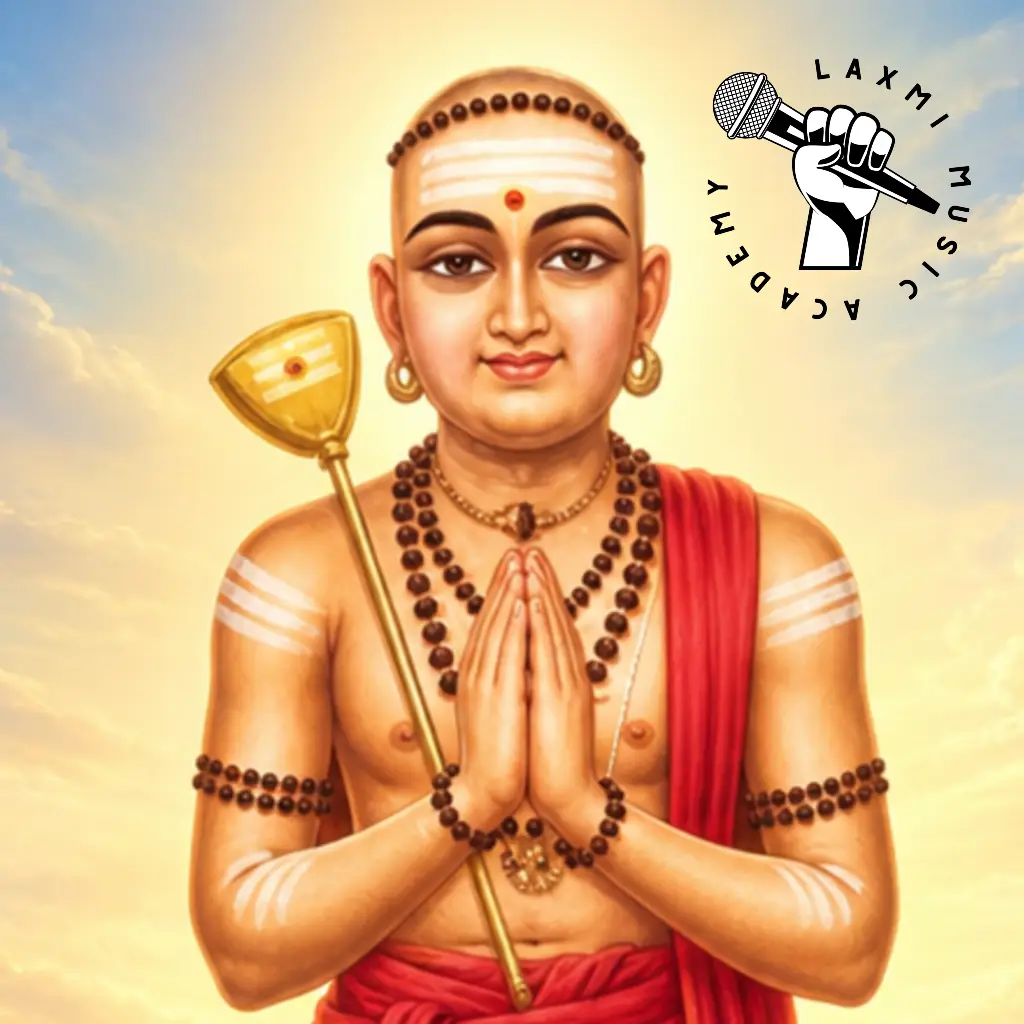
 Life & Miracles
Thirunavukkarasar (Appar)
Thevaram · Tirumurai 4 to 6 ⏱ 3 min readCalled Appar (“Father”) by his followers, he endured great trials before returning to Shaivism. His hymns are cherished for their humility, surrender and emotional sincerity.
The Boy Raised on Devotion
In the town of Tiruvamur, in the Chozha country, a boy named Marulneekkiyar was born into a humble, hard-working family. While he was still young both his parents passed away, and it fell to his elder sister, Thilagavathiyar, to raise him. She was a soul utterly devoted to Lord Shiva, and she poured that devotion into the brother she loved. Yet the road he would take back to the Lord would prove longer, and stranger, than anyone could have imagined.
The Years Astray
As he grew, his heart turned away from Shiva. He embraced Jainism, and rose swiftly within it, a monk respected across the land for his scholarship and discipline, honoured with the name Dharmasenar. His sister was heartbroken. But she never argued and never despaired; she simply kept praying, day after day, that one day her brother would find his way home.
The Ash That Healed
Her prayers were answered through suffering. Dharmasenar was struck down by an agonising affliction of the stomach, a pain so fierce that no Jain medicine, no fast and no penance could ease it. In his desperation, his sister begged him to turn to Lord Shiva. And so, in secret, the great Jain monk made his way to the very Shiva temple where his sister worshipped. She smeared the sacred ash upon his body and prayed, and the instant the holy ash touched him, the torment that had defied every remedy simply vanished. He renounced Jainism on the spot. He had come home. From the hymns that now poured out of him, the Lord gave him a new name: Thirunavukkarasar, “King of the Tongue.”
Tried by Fire and Sea
His return enraged the Jains, who held great sway at the court of the Pallava king Mahendravarman I. They turned the king against him, and the persecutions began. He was cast into a blazing lime-kiln, and walked out unharmed. He was served rice laced with poison, and it did not touch him. At last they bound him to a great stone and hurled him into the sea, yet he floated gently back to shore, carried by the five sacred syllables of the Lord's name, Namah Shivaya, which never left his lips.
Fire could not burn him, poison could not touch him, and the sea would not keep him.
Through every ordeal he simply sang. Watching a man survive the unsurvivable again and again, King Mahendravarman was shaken to his very core. He too turned from Jainism to the worship of Shiva, and became one of the faith's greatest royal patrons.
The Servant with the Hoe
For the rest of his long life, Appar walked the temples of Tamil Nadu on foot, a small hoe in his hand. With it he performed his beloved uzhavara pani, clearing the weeds, thorns and stones from the grounds of Shiva's shrines, the humblest of services offered with the greatest of love. As he walked, he sang; and his thousands of hymns, gathered in the fourth, fifth and sixth books of the Thevaram, are treasured for their tender simplicity, making the deepest truths feel close enough to touch. He called himself nothing more than the Lord's servant. He travelled, too, with the boy-saint Sambandhar, who loved him so dearly that he called him “Appar”, Father, and so the world remembers him still. At last, at the temple of Tiruppugalur, he laid down his earthly life and merged forever with the Lord he had served.